
Sciatica in Montreal: lumbar roots and choice of a cautious treatment
08/11/2026
Recurrent sciatica: symptoms that often come back
08/11/2026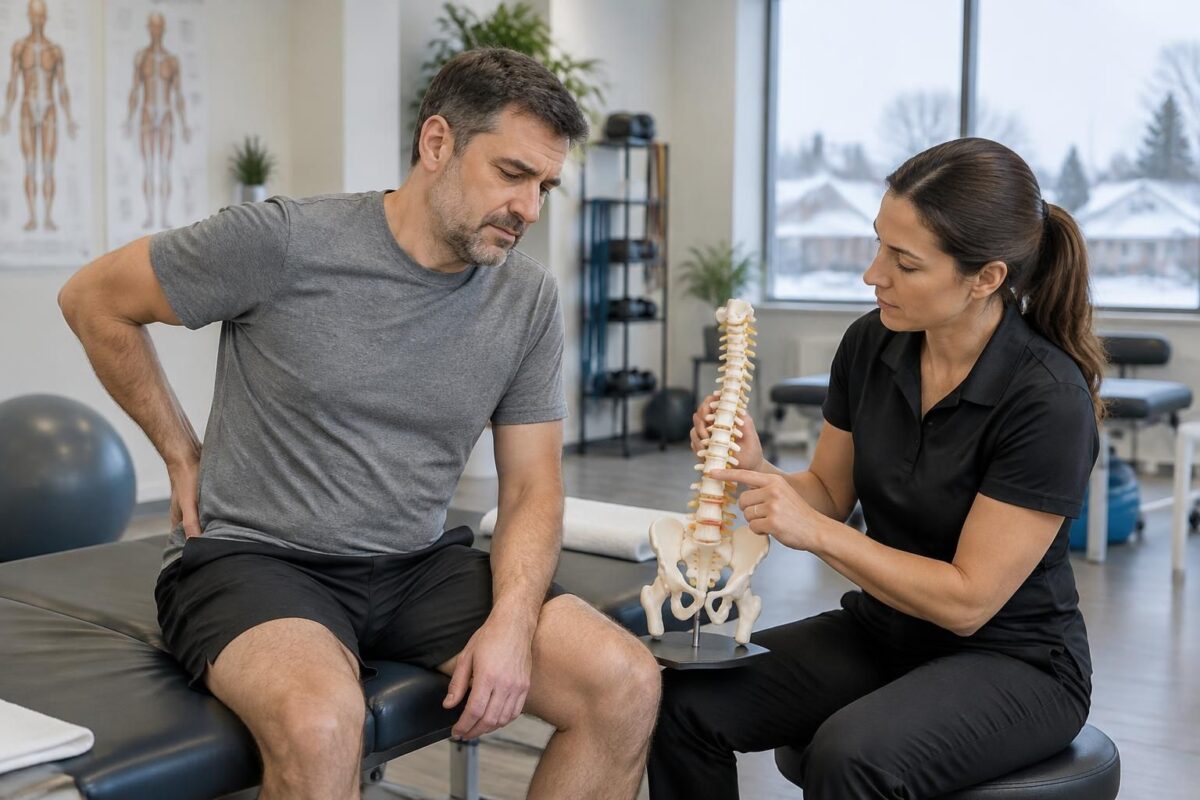
IN BRIEF
| Sciatica is pain related to the irritation or compression of a lumbar nerve root, which can radiate from the lower back to the buttock and leg. In Terrebonne, an evaluation allows for cautious treatment tailored to the cause and symptoms, which may include non-surgical approaches to promote relief and return to activities. |
In Terrebonne, pain that starts in the lower back and descends into the buttock or leg may be related to the irritation of a lumbar root, often L5 or S1. A herniated disc is a possible cause, but only an evaluation can guide management.
A cautious treatment generally prioritizes maintaining appropriate activity and non-surgical approaches chosen according to the symptoms. Consult a healthcare professional promptly if significant or progressive weakness appears, or in case of urinary or bowel disturbances or numbness in the saddle region.
A sciatica in Terrebonne can cause pain that starts in the lower back or buttock and descends into the leg. The pathway often depends on the irritated lumbar root, particularly L4, L5, or S1. A cautious treatment choice begins with a clinical evaluation, checking for warning signs and an approach tailored to the cause, without assuming that imaging or intervention is always necessary.
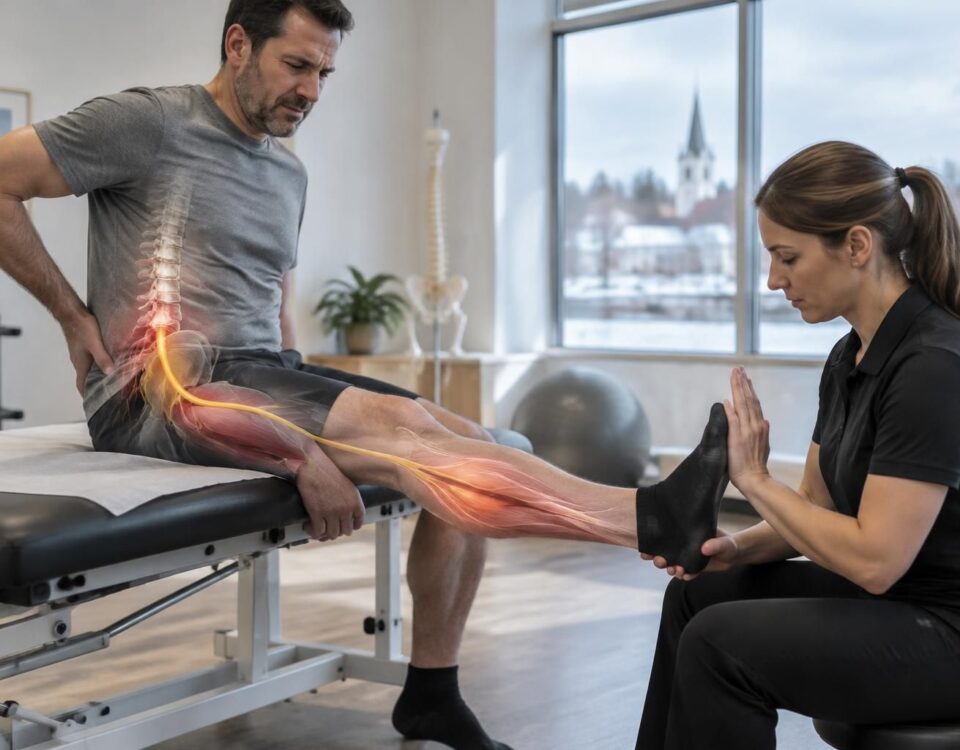
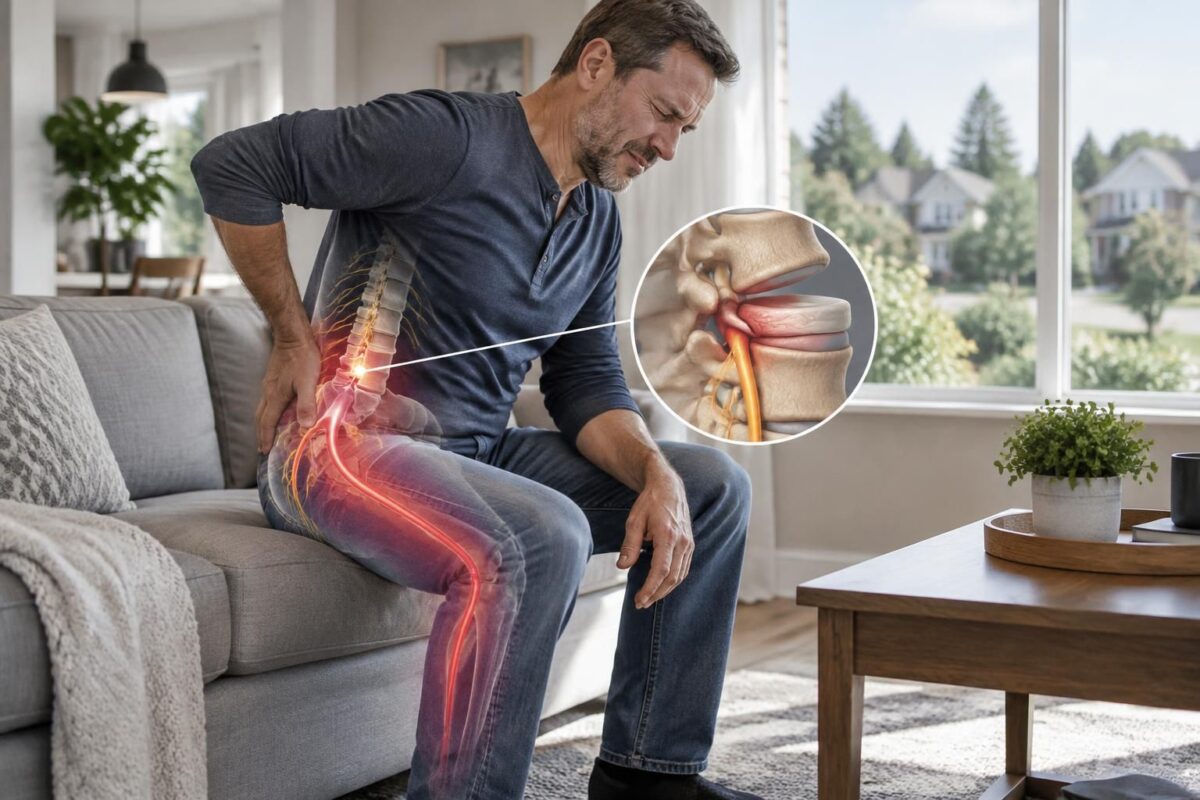
Sciatica refers to pain related to the irritation or compression of a nerve root contributing to the sciatic nerve. It typically affects one side of the body and can extend from the lower back to the buttock, then to the thigh, calf, or foot. Tingling, numbness, or a decrease in strength may also occur.
The term “sciatica” describes a set of symptoms, not a single cause. A herniated disc can irritate a nerve root. Other causes are possible, including changes related to osteoarthritis or narrowing of the passages where nerves travel. The pathway of the pain helps guide the evaluation but is not sufficient to confirm the cause.
The Role of Lumbar Roots L4, L5, and S1
The lumbar and sacral nerve roots transmit sensory and motor information between the lower back and the legs. Irritation can lead to radiating pain, abnormal sensations, or weakness. Signs vary from person to person and do not always correspond exactly to a theoretical pattern.
Pain Sometimes Associated with L4
Affecting near the L4 root may be accompanied by pain in the thigh or knee and, sometimes, a change in sensitivity or strength. The exact pathway depends on the cause and the affected structures. Therefore, knee pain does not alone confirm L4 sciatica.
Pain Compatible with L5
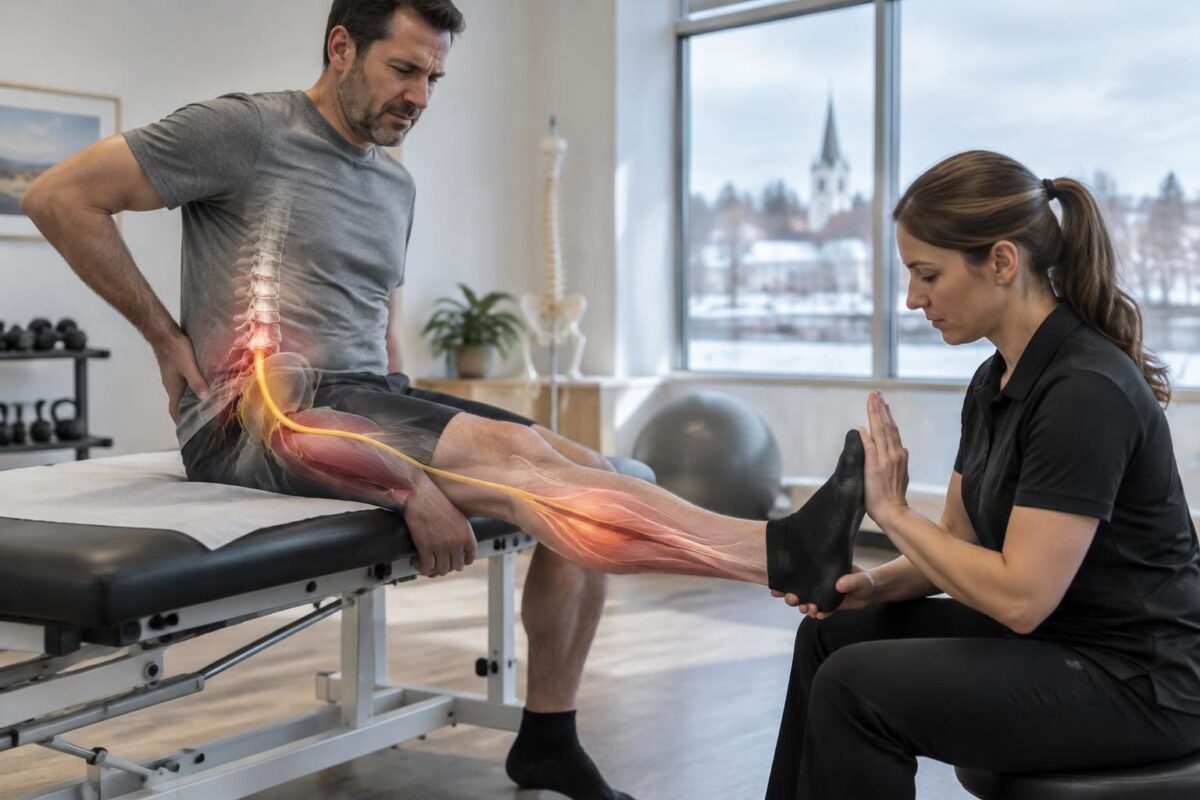
When the L5 root is irritated, pain may descend from the buttock to the side of the leg and the top of the foot. Some individuals describe tingling near the big toe or difficulty lifting the foot. To learn more about possible pathways, refer to the pages on pain pathways associated with roots L4, L5, and S1 and the frequent involvement of L5 and S1.
Pain Compatible with S1
Irritation of S1 can cause pain that runs behind the thigh and calf, sometimes down to the heel or the outer edge of the foot. Burning sensations in the foot may also be reported. These signs warrant evaluation, as they can have various causes. Also, consult the article on burning in the foot and possible nerve compression.
Sciatica and herniated disc in Terrebonne: understanding the link
IN BRIEF Sciatica refers to pain that follows the path of the nerve in the buttock and leg; a herniated disc can irritate it, but an anomaly on the MRI is not sufficient to establish the cause. In Terrebonne, the…
Recognizing Symptoms and Their Progression
Sciatic pain can be described as burning, electric shock-like, or sharp pain. It may intensify with certain movements, coughing, or sneezing. Some individuals primarily experience pain in the leg; others also have pain in the lower back. The intensity may vary throughout the day and after walking. Examples of symptoms are described in the articles on pain that increases in the evening and on pain or numbness after walking.
Pain radiating into the leg does not always indicate a serious condition. However, new or increasing weakness, significant loss of sensation, or rapid worsening requires particular attention. The clinician considers the progression, history, and the effects of symptoms on daily activities.

Sciatica in Terrebonne: how to interpret pain according to the leg path
IN BRIEF Sciatica is a pain that can start from the lower back or the buttock and travel down the leg to the foot. Its path, along with any tingling or weakness, helps guide the assessment but is not sufficient…
Evaluation: Determining the Cause Before Choosing a Treatment
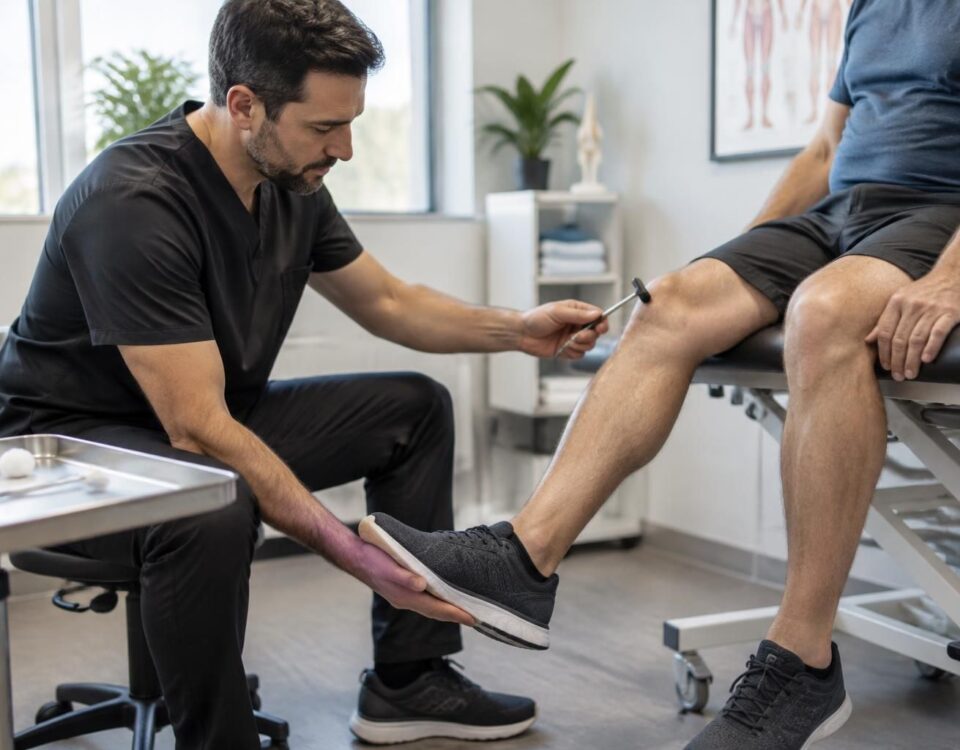
The evaluation typically begins with questions about the onset of pain, its pathway, factors that worsen or alleviate it, as well as associated symptoms. The examination may include sensitivity, strength, mobility, and reflex tests. These elements help determine whether the signs are consistent with nerve irritation and whether they require medical advice.
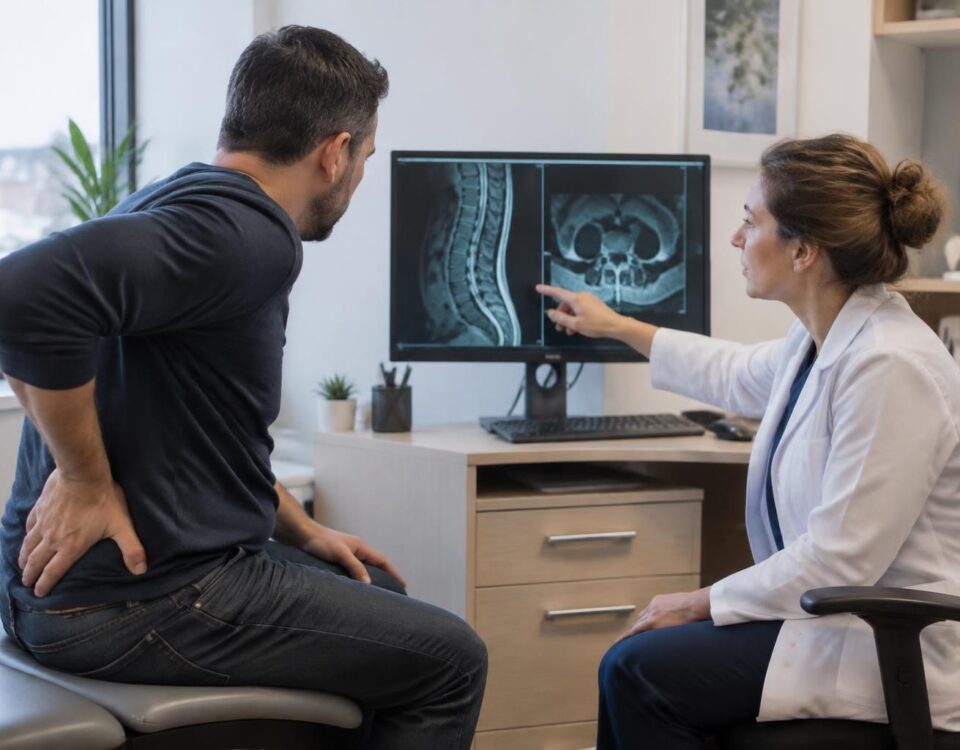
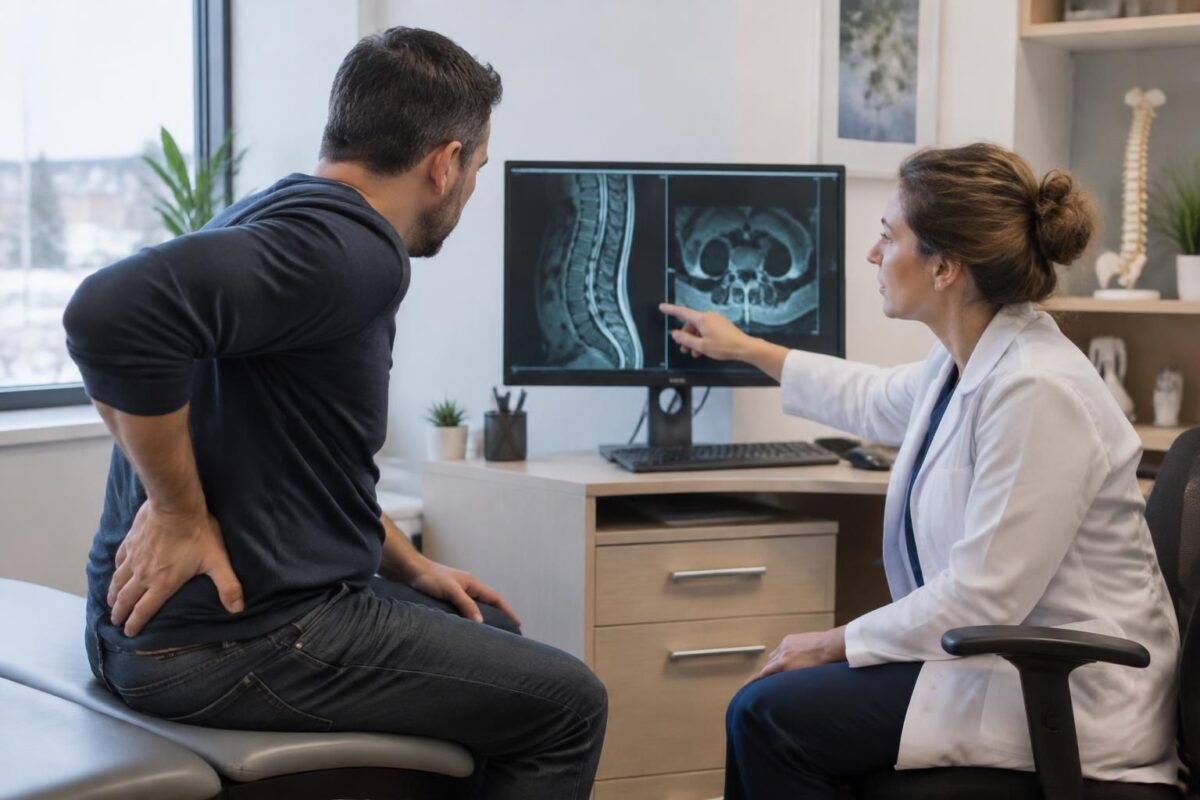
Imaging, such as an MRI, is not necessary in all cases. A healthcare professional may request it when the symptoms, examination, or duration justify it. Imaging should be interpreted in relation to the symptoms: visible changes in the back are not always the source of pain.
For general information on consultation and treatments, you can refer to the SOS Sciatique page on treatment of sciatica in Terrebonne. A more detailed presentation of symptoms and causes is also found in the article dedicated to sciatica and the back.

Sciatica in Terrebonne: L5-S1, canal, foramen and nerve compression
IN BRIEF The sciatica L5-S1 corresponds to irritation or compression of a nerve root, sometimes related to a disc herniation or narrowing of the lumbar canal or the foramen. The pain may radiate from the lower back to the buttock,…
Choosing Cautious Treatment in Terrebonne
Treatment depends on the probable cause, the intensity of symptoms, the examination, and the progression. Improvement may occur over time, but each situation is different. A cautious plan avoids promises of recovery and includes reevaluation if the pain persists, worsens, or is accompanied by new signs.
Starting with Appropriate Management
The professional can recommend relief measures and discuss appropriate options for your health condition. Do not start, modify, or stop any medication without the advice of a licensed professional. Also, avoid resuming activities that significantly increase pain or neurological symptoms. A prolonged period of bed rest is generally not a strategy to adopt without clinical advice.
Consider manual therapies with realistic expectations
Depending on the assessment, a manual approach or functional support may be considered for certain individuals. These therapies do not replace a medical diagnosis and cannot solely confirm that a nerve root is compressed. At the TAGMED Clinic, options may include specific osteopathy, precision percussion, or, when indicated after assessment, motorized neurovertebral decompression. The relevance of each option depends on the medical history; no results can be guaranteed.
To learn about the services offered, visit the pages on sciatica treatment in Montreal and Mont-Royal and treatment in Terrebonne, or the TAGMED Clinic website.
Reassess if symptoms change
A follow-up consultation allows for the monitoring of progress and reviewing options if pain does not decrease or severely limits activities. Persistent pain does not automatically indicate that surgery is necessary. A doctor can determine if tests or specialized advice are indicated, especially in the presence of weakness or loss of sensation.
Sciatica in Terrebonne: why an MRI must be correlated with symptoms
IN BRIEF Sciatica is a pain that often radiates from the lower back to the buttock and leg. A lumbar MRI shows the structures of the spine, but its results must correspond to the symptoms and clinical examination: a visible…
When to seek urgent medical help
Seek immediate emergency care if you experience loss of bladder or bowel control, difficulty urinating, numbness in the saddle area, or significant or progressive weakness in a leg or foot. Pain accompanied by fever, recent trauma, or rapid deterioration also warrants urgent medical evaluation.

Sciatica in Terrebonne: reflexes, strength, and sensitivity in evaluation
IN BRIEF In Terrebonne, the assessment of sciatica checks the reflexes, strength, and sensitivity of the legs to identify possible nerve damage. These observations, combined with the pain’s pathway and its evolution, help to guide the next steps and recognize…
About the author
Sylvain Desforges, B.Sc., D.O., N.D., Doctor of Osteopathy and Naturopath, is the founding president of TAGMED and the ACMA association. His practice focuses on chronic pain in the spine, lower back pain, and pain associated with sciatica, particularly when it radiates to the buttock, leg, calf, foot, or toes.
Through SOS Sciatique, he publishes educational content on the symptoms of sciatica, its possible causes — such as herniated discs, disc pinching, foraminal stenosis, or irritation of a lumbar nerve root — and the non-surgical approaches that may be considered based on the assessment. At the TAGMED Clinic, care may include, as applicable, motorized neurovertebral decompression, specific osteopathy, or precision percussion.
Sciatica in Terrebonne: muscle weakness according to the irritated nerve root
IN BRIEF Sciatica with muscle weakness can occur when a lumbar nerve root is irritated; affected movements, such as raising the foot or walking on tiptoes, provide clues but are not sufficient for a diagnosis. In Terrebonne, an evaluation can…
Medical Disclaimer
The information published on SOS Sciatique is provided for educational purposes. It does not replace a consultation, diagnosis, advice, or treatment provided by a physician or any other licensed health professional. The author of this article is neither a physician nor a specialist in a medical specialty recognized by the Collège des médecins du Québec. The approaches of osteopathy, manual medicine, or functional support described on this site do not constitute medical acts and are not intended to replace medical follow-up.
Consult a physician or emergency service in cases of loss of bladder or bowel control, anesthesia in the saddle area, significant or progressive weakness in the leg or foot, fever, recent trauma, severe pain, or rapid deterioration. For more details, please read our Legal Notice.
Medical Disclaimer: The information and advice provided on this site do not replace the advice, diagnosis, or treatment of a healthcare professional. Please note that Sylvain Desforges, B.Sc., D.O., N.D., Doctor of osteopathy, is neither a medical doctor nor a physician, and is not a specialist in a medical specialty as defined by the Collège des médecins du Québec. Manual medicine, functional medicine, and sports medicine as described on this site exclude any treatment or medical diagnosis made by a physician or specialist. Always consult your physician for any medical questions. For more details, please read our Complete Legal Notice.
Sciatica: Identifying the affected root
- Root L5: pain may radiate to the top of the foot and the big toe.
- Root S1: pain is often felt behind the leg, down to the heel or the side of the foot.
- Possible signs: burning, shocks, numbness, or weakness.
- A herniated disc, nerve irritation, or foraminal narrowing may be involved.
In Terrebonne: Choose a cautious approach
- Have symptoms assessed before choosing a treatment.
- Favor a management plan tailored to pain, mobility, and history.
- Avoid prolonged bed rest and gradually resume activities according to tolerance.
- Seek emergency care in cases of progressive weakness, loss of sensation in the groin, or urinary or bowel issues.

In Terrebonne, pain that starts in the lower back and radiates into the buttock or leg may correspond to sciatica, often related to irritation of a lumbar nerve root. A cautious treatment choice begins by identifying symptoms, ruling out emergency signs, and favoring measures tailored to the situation rather than a systematic intervention.
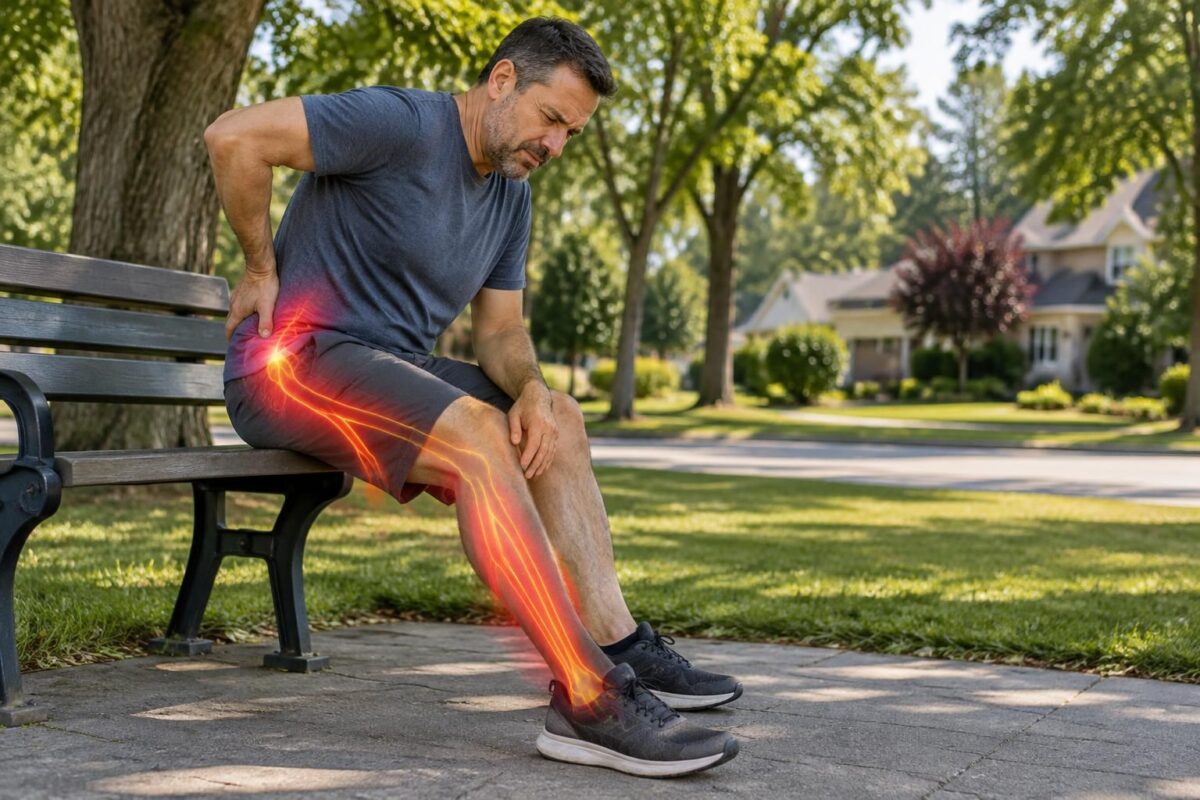
Sciatica in Terrebonne: nerve pain and sensory territory
IN BRIEF Sciatica is a nerve pain that can start from the lower back and radiate into the buttock and leg, sometimes down to the foot, with tingling or numbness. In Terrebonne, identifying the affected sensory territory helps guide the…
Understanding the role of lumbar roots
The sciatic nerve is formed from nerve roots originating from the lower spine and the sacrum. When one of these roots, often L5 or S1, is irritated or compressed, the pain may follow a path in the buttock and the back or side of the leg, sometimes extending to the foot. Tingling, numbness, or a burning sensation may also occur.
Sciatica describes a set of symptoms, rather than a single cause. A herniated disc may be involved, but arthritis, narrowing of the pathways where the nerves travel, or, more rarely, a muscular issue can produce similar pains. The path of the pain helps guide the evaluation but does not alone confirm a diagnosis.
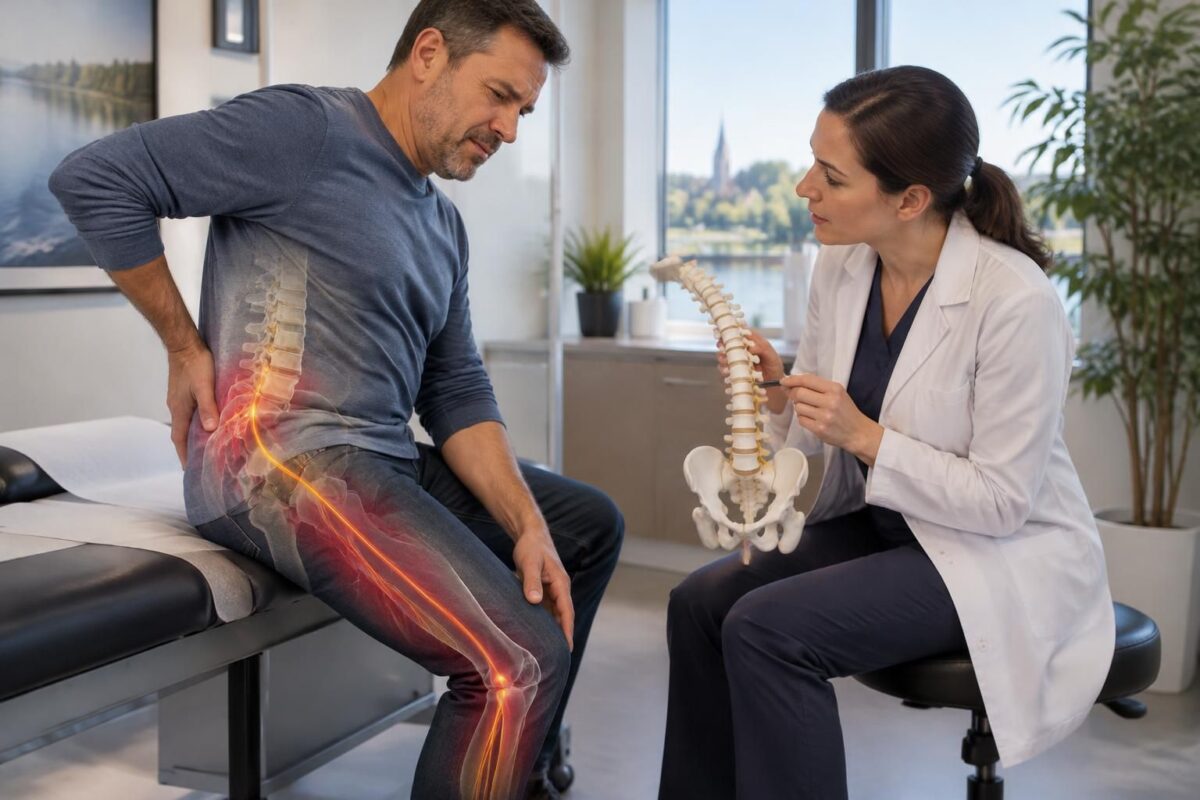
Sciatica in Terrebonne: L4, L5, S1, how to find your way?
IN SHORT Sciatica is a pain that can radiate from the buttock down the leg when a nerve root is irritated. The levels L4, L5, and S1 can produce overlapping symptoms; therefore, the pathway of the pain alone is not…
Choosing a Cautious Approach in Terrebonne
Start with an Appropriate Evaluation
A healthcare professional can examine strength, sensitivity, reflexes, and movements that reproduce symptoms. Imaging, such as MRI, is not automatically necessary: it may be considered depending on progress, observed signs, and clinical decisions. If the pain persists, intensifies, or significantly limits activities, seek advice from a doctor or authorized professional.
Stay Active Without Strain
When symptoms allow, gentle and progressive activity is generally preferable to prolonged bed rest. Short walks, changes in position, and a gradual return to daily tasks can help maintain mobility. Temporarily reduce movements that significantly worsen the pain, especially lifting heavy objects or certain twists. Stop an exercise if it intensifies symptoms in the leg.
Pain relievers may not be suitable for everyone. Before using an anti-inflammatory or other medication, especially in the presence of a condition or regular treatment, seek advice from a doctor or pharmacist. Manipulations and exercises should also be tailored to the evaluation rather than applied uniformly to every person.
When to Seek Urgent Help
Quickly consult an emergency service in case of loss of bladder or bowel control, numbness in the saddle area, or significant or progressive weakness in a leg or foot. A fever associated with severe lower back pain, recent trauma, or rapid worsening also warrants immediate medical advice.
At TAGMED Clinic, an evaluation can help determine if non-surgical measures, such as specific osteopathy or motorized neurovertebral decompression, are appropriate. These approaches do not replace a medical diagnosis and may not be suitable for all causes of pain.
About the Author
Sylvain Desforges, B.Sc., D.O., N.D., Doctor of Osteopathy and Naturopath, is the founding president of TAGMED and the ACMA association. His practice particularly focuses on chronic spinal pain and pain associated with sciatica.
Medical Disclaimer: This content is educational and does not replace a consultation, diagnosis, or treatment by a licensed healthcare professional. The author is neither a physician nor a specialist in a medical field recognized by the Collège des médecins du Québec. In the presence of emergency signs, consult a physician or go to the emergency room.
| Clinical Marker | Cautious Choice in Terrebonne |
|---|---|
| Pain following the buttock and leg | The path may guide the evaluation without identifying the cause alone. |
| Root L5 | The pain may extend towards the top of the foot and the big toe. |
| Root S1 | The pain may follow the back of the leg down to the heel or the side of the foot. |
| Possible Causes | Herniated disc, foraminal narrowing, or other nerve irritation: an exam helps distinguish them. |
| Recent symptoms without warning signs | Prioritize appropriate activity and avoid prolonged bed rest. |
| Persistent or limiting pain | Evaluate non-surgical options based on the cause and symptoms. |
| Progressive weakness, urinary issues, or saddle anesthesia | Consult an emergency service immediately. |
Sciatica in Terrebonne: Illustrative Testimonials on Lumbar Roots and Choosing a Cautious Treatment
Note: The stories below are fictional examples created for educational purposes. They do not represent real patients and do not guarantee treatment outcomes. Pain radiating down the leg can have different causes; only an individual evaluation can guide management.
“The pain didn’t stay in the lower back”
For a few days, pain started from the lower back, went through the buttock, and radiated down the back of the thigh. I also had tingling in the calf. I was explained that irritation of a lumbar root, particularly L5 or S1, could produce pain following the path of the sciatic nerve. I understood that I needed to evaluate my symptoms rather than assume right away that it was a herniated disc.
“I preferred to start with a cautious approach”
In Terrebonne, I was looking for a way to better manage my pain without rushing into intensive treatment. The evaluation focused on the pain path, sensations in the leg, strength, and activities that worsened it. We discussed non-surgical options that could be considered based on my condition, taking into account my limits and the evolution of symptoms.
“Numbness changed the priority”
At first, I mostly felt tingling in my foot. When I noticed new weakness, I understood that I shouldn’t just wait or continue exercises without professional advice. A loss of strength that appears or progresses justifies a rapid medical evaluation. The choice of treatment must consider neurological signs, not just the intensity of the pain.
“I was explained why imaging is not automatic”
I thought that an X-ray or MRI was always necessary to understand sciatica. I learned that clinical evaluation often serves as a first step and that imaging tests are considered based on symptoms, their duration, and examination results. This explanation helped me better understand why a cautious approach begins with gathering the right information.
“I adapted my activities rather than staying in bed”
When the pain radiated in my leg, I tended to avoid any movement. I was advised to respect my capabilities and not prolong bed rest, while avoiding movements that strongly triggered the symptoms. Resuming activities should remain gradual and individualized; a movement that significantly worsens the pain should not be forced.
These examples remind us that pain compatible with sciatica may be related to irritation or compression of a lumbar nerve root, but also to other causes. A herniated disc, narrowing of the spaces where nerves pass, or certain disorders of the tissues around the hip may require different evaluations. The cautious treatment consists of clarifying the symptoms, monitoring their progression, and choosing appropriate options with a healthcare professional.
For an evaluation in Terrebonne, the services of TAGMED Clinic may include, depending on the case and assessment, motorized neurovertebral decompression, specific osteopathy, or a precision impactor. These approaches do not replace a medical diagnosis and are not necessarily suitable for all situations.
Quickly consult a doctor or an emergency service in case of loss of urinary or bowel control, numbness in the saddle area, significant or progressive weakness in the leg or foot, fever, recent trauma, severe pain, or rapid deterioration.
About the author
Sylvain Desforges, B.Sc., D.O., N.D., Doctor of Osteopathy and naturopath, is the founding president of TAGMED and the ACMA association. His practice focuses in particular on chronic spinal pain, low back pain, and pain compatible with sciatica, including when it radiates to the buttock, leg, calf, foot, or toes.
Medical disclaimer
The published information is provided for educational purposes and does not replace a consultation, diagnosis, advice, or treatment by a physician or another licensed healthcare professional. The author is neither a doctor nor a specialist in a medical specialty recognized by the Collège des médecins du Québec. Osteopathy, manual medicine, or functional support approaches do not constitute medical acts and are not intended to replace medical follow-up.
Sciatica in Terrebonne: understanding lumbar roots and choosing cautious treatment
Sylvain Desforges, B.Sc., D.O., N.D., Doctor of Osteopathy and naturopath, has dedicated his career to supporting people living with persistent pain, particularly those affecting the lower back and radiating down the leg. Founding president of TAGMED and the ACMA association, he is interested in innovation in health and the thoughtful integration of different approaches in the management of musculoskeletal disorders. His work emphasizes assessment, information, and adapting care to each person’s situation.
In Terrebonne, pain felt in the buttock, back of the thigh, or down to the foot may be compatible with sciatica. This term generally describes pain related to irritation of a lumbar nerve root that contributes to the sciatic nerve. The path varies depending on the affected root: some people feel shooting pain towards the top of the foot, while others experience pain down to the calf or the sole of the foot. Tingling, numbness, or a feeling of weakness may also accompany the pain.
Sciatica is not a cause in itself: it constitutes a set of symptoms that needs investigation into its origin. A herniated disc can irritate a nerve root, but arthritis, narrowing of the nerve passage spaces, or other issues can also contribute to the symptoms. Pain alone does not allow us to precisely determine the cause. A healthcare professional can examine its location, progression, movements that alter it, and the possible presence of changes in strength or sensitivity.
The choice of cautious treatment begins with this evaluation and takes into account the general state, history, and goals of the person. When the situation allows, a conservative approach may include maintaining adapted activities, suggestions for managing daily movements, and manual or functional support. At TAGMED Clinic, options may include specific osteopathy, motorized neurovertebral decompression, or precision impactor, depending on the assessment. These interventions are not suitable for everyone and do not replace a medical evaluation when necessary.
Technologies like decompression, laser, or shockwaves may be considered in certain contexts, but their relevance depends on the assessed problem and the follow-up goals. It is wise to discuss possible benefits, limitations, precautions, and alternatives before undergoing treatment. Improvement may be gradual; thus, it is important to re-evaluate symptoms and adjust the approach if pain intensifies or if new signs appear.
A quick medical consultation is required in case of significant or progressive weakness in the leg or foot, loss of urinary or bowel control, or numbness in the saddle area. A fever, recent trauma, or rapid deterioration also warrant medical attention. Educational content does not replace a diagnosis or recommendations from a licensed healthcare professional.
For people in Terrebonne seeking an evaluation related to sciatica, the goal is to obtain understandable explanations and a tailored plan, without presuming the cause or promising a result. The support of Sylvain Desforges fits into this approach: considering the symptoms, directing towards appropriate resources, and contemplating non-surgical options when the evaluation indicates they may be relevant.
In Terrebonne, pain that starts from the lower back and radiates into the buttock or leg may indicate irritation of a lumbar root, often L5 or S1. Its path, intensity, and associated signs help guide the assessment, but alone are not sufficient to determine the cause or treatment. A cautious approach begins with an appropriate examination and considers the progression of the symptoms.
Understanding lumbar roots and symptoms
Irritation in L5 may particularly be accompanied by pain on the side of the leg and the top of the foot; an S1 involvement may manifest more at the back of the leg down towards the heel or the sole of the foot. These pathways vary from person to person. Tingling, numbness, or weakness may also be present. To better describe these signs during a consultation, specify their location, evolution, and the activities that worsen or relieve them. You can consult the pointers on describing sciatica symptoms in Terrebonne and on the importance of clinical examination to distinguish between L5 or S1 irritation. Additional information is also provided on L4-L5 and L5-S1 conditions.
Sciatica is a set of symptoms, and not a diagnosis on its own. A herniated disc can irritate a nerve root, but arthrosis, foraminal narrowing, or other issues may also be considered. The evaluation generally relies on the history of symptoms and physical examination; imaging or another test may be discussed when relevant based on the clinical picture. For an overview of causes, signs, and management options, see the guide on sciatica as well as the information from the MSD Manual and the medical recommendations on sciatica.
Choose a cautious management approach
When the situation allows, management often prioritizes maintaining tolerated activities and gradual resumption, rather than prolonged bed rest. Exercises, medications, or manual therapy do not automatically suit everyone: the choice depends particularly on the examination, history, contraindications, and response to measures already tried. Pain that prevents sitting or disrupts sleep deserves to be described to the consulted professional; resources address pain while sitting and pain that wakes you at night. In Terrebonne, the evaluation and care options proposed by TAGMED Clinic can be consulted based on your situation; non-surgical approaches should be considered based on the evaluation, without replacing medical follow-up when required.
Significant or progressive loss of strength in the leg or foot, difficulties with urination or incontinence, loss of sensation in the saddle area, or lower back pain accompanied by fever require urgent medical evaluation. These signs should not be managed solely by manual therapy. General information, including that in the file on nerve symptoms not to be trivialized, do not replace a diagnosis or consultation with an authorized healthcare professional.

Sylvain Desforges, B.Sc., D.O., N.D., docteur en ostéopathie
Dr Sylvain Desforges, B.Sc., D.O., N.D., osteopath, is the founding president of TAGMED and of the ACMA association. He dedicates his practice to chronic spinal pain, low back pain and symptoms compatible with sciatica, particularly when pain radiates toward the buttock, leg, calf, foot or toes.
Through SOS Sciatique, he publishes educational content on sciatica symptoms, possible causes such as disc herniation, disc narrowing, foraminal stenosis or irritation of a lumbar nerve root, as well as non-surgical approaches that may be considered according to the evaluation. At Clinique TAGMED, care may include, depending on the case, motorized neurovertebral decompression, specific osteopathic care or precision percussion.
For an evaluation related to sciatica treatment in Montreal / Mount Royal or sciatica treatment in Terrebonne, please consult the services available at Clinique TAGMED.
Medical disclaimer
The information published on SOS Sciatique is provided for educational purposes only and does not replace a consultation, diagnosis, opinion or treatment provided by a physician or another authorized healthcare professional. The author of this article is neither a medical doctor nor a specialist in a medical specialty recognized by the Collège des médecins du Québec. The osteopathic, manual medicine or functional support approaches described on this site do not constitute medical acts and are not intended to replace medical follow-up.
Consult a physician or emergency service in cases of loss of bladder or bowel control, anesthesia in the saddle area, significant or progressive weakness in the leg or foot, fever, recent trauma, severe pain or rapid worsening of symptoms. For more details, please read our Legal Notice.