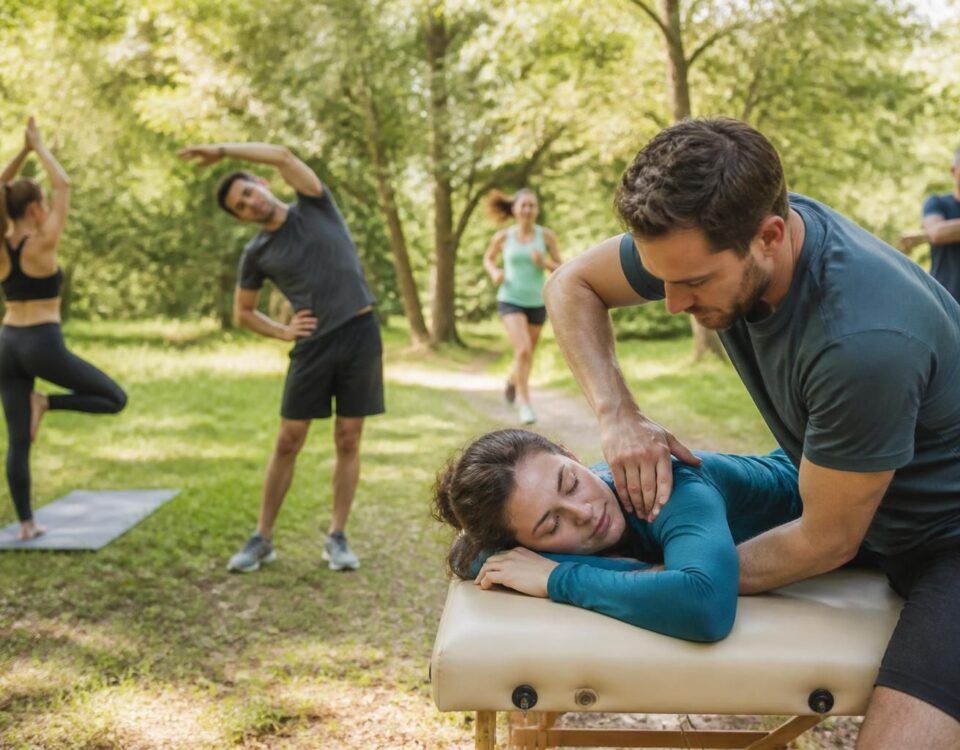
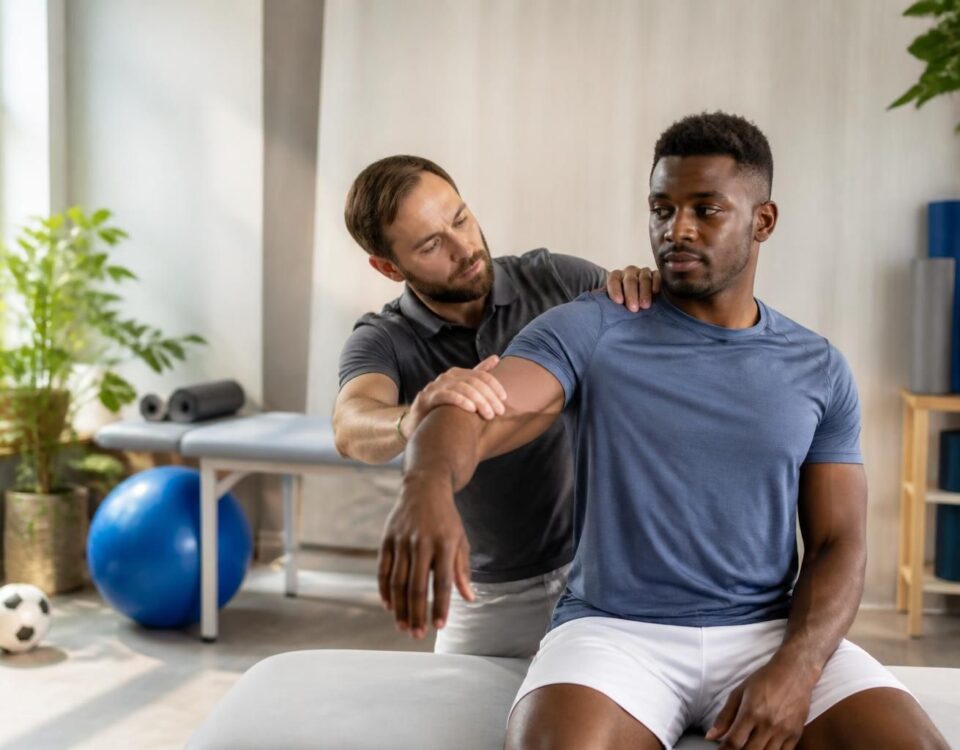
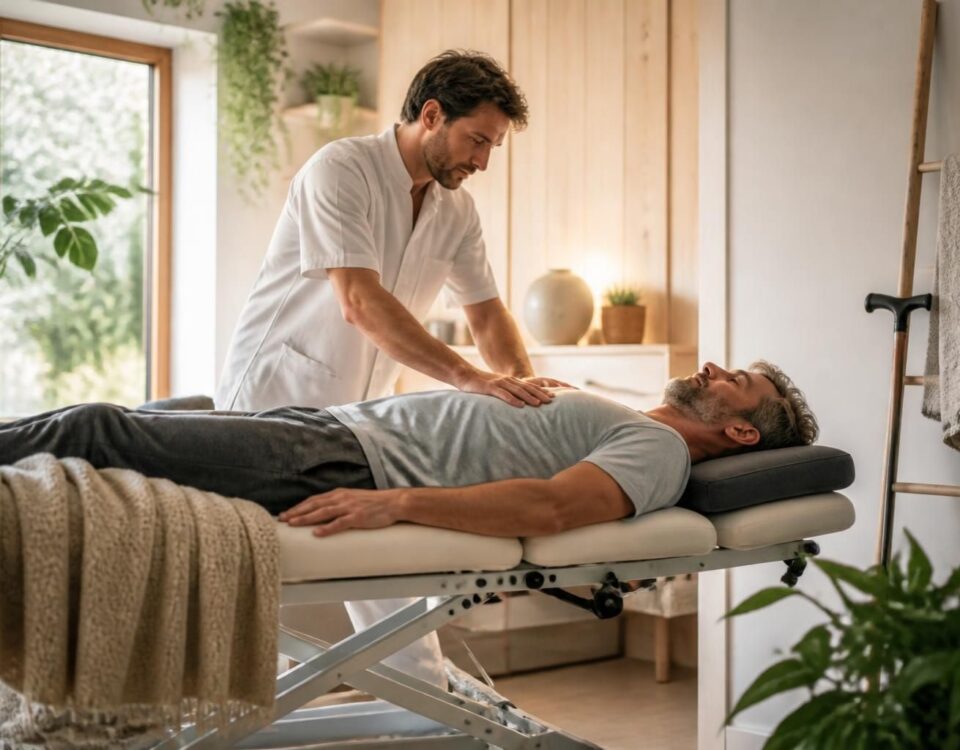
Osteopathy and sports recovery: maximizing performance
27/06/2026
How osteopathy helps treat neuropathic pain
27/06/2026
In short
| In short, the Osteopathic approaches for Prevent overuse injuries Offer a proactive solution for athletes and active people. by combining gentle handling, Joint mobilization and soft tissue work, they restore Muscle and joint balance and improve the mobility and the recovery. At Montreal, this service is particularly relevant for athletes wishing to optimize their performance while reducing the risk of injury. This personalized and sustainable prevention fits easily into training to support a safer and more efficient active life. |
The Osteopathic approaches To prevent Overuse injuries are based on themuscle balance, the Joint mobility and the soft tissue work. thanks to Gentle techniques of handling, of Joint mobilizations And some Prophylactic stretches, they make it possible to identify and correct imbalances before they become problematic. This proactive prevention reduces risk, improves recovery and supports sports performance.
Osteopathic approaches to prevent overuse injuries are based on soft manual techniques that improve mobility, muscle balance and recovery. By targeting muscles, fascias and joints, osteopathy aims to reduce tension and optimize posture and movement mechanics. This approach, applied in a preventive way, reduces the risk of repetition-related injuries and improves overall performance.
Osteopathic approaches to prevent overuse injuries are based on simple, non-invasive gestures. They aim to correct imbalances before they become problematic, to release accumulated tension and to support optimal joint function. This prevention involves a global assessment of the body and targeted interventions that respect the patient’s rhythm.
Essential osteopathic techniques
Gentle handling and Joint mobilization Restores the mobility of the joints and prevents stiffness associated with overwork. The soft tissue work and the fascias Releases tension and improves circulation, promoting more effective recovery and better resilience to effort. Postural and biomechanical assessment helps identify stress areas and correct patterns that increase the risk of injury.
Osteopathic practice is based on simple and repeatable clinical observations. The techniques promote a harmonized range of motion and support the balance between muscle chains. They are adapted to each individual, according to his history, his sport and his physical requirements.
Personalized assessment and prevention
Effective prevention is based on Postural evaluation and an understanding of the biomechanical mechanisms specific to each athlete. The practitioner develops a preventive plan that can include warm-up routines, technical adjustments and advice on everyday gestures. The goal is to strengthen vulnerable areas and improve coordination between the different segments of the body. This approach is part of a training recognized by institutions such as NUMSS, NAO, National University of Medical Sciences or National Academy of osteopathy.
Interprofessional collaboration is key. The osteopath can work in addition to other health professionals and rely on the good practices of relevant professional associations, such as ACMA, the College of Canadian Osteopaths and the College of Canadian Osteopaths, to ensure consistent and secure.
Role of collaboration and the professional framework
Prevention of overuse injuries benefits from teamwork. Osteopathy is part of a global health approach, where the initial evaluation guides intervention choices and where monitoring allows adjustment of preventive measures over time. When an athlete trains intensely, the addition of a qualified osteopath helps maintain a lasting muscle and joint balance, thus reducing the risk of recurrence and supporting a safe progression.
Integration and overall well-being
The effects of osteopathy on prevention include a Better circulation, a reduction of tensions and an Improved movement control. This approach contributes to better recovery, smoother mobility and a general feeling of well-being. It is a useful component of a health routine that aims to optimize performance while minimizing pain related to overwork.
To deepen, Specialist resources address the benefits of osteopathy on repetitive work pain and support mechanisms for sports performance. Examples and references selected Thoughtfully can be found at the following sites: The benefits of osteopathy on repetitive work pain, Osteopathy and chronic leg pain, Why osteopathy is effective against sciatica, How osteopathy supports recovery after an accident. Other useful readings include resources available on Tagmed Clinic and on neurovertebral decompression.
training and professional executives in osteopathy guide practices. Osteopaths can be trained in recognized institutions such as Numss, NAO, National University of Medical Sciences or National Academy of Osteopathy. For athletes, the objective remains sustainable prevention, the safety of practices and a measurable improvement in performance without increasing the risk of injury.
In the context of a multidisciplinary practice, additional methods exist, in particular non-invasive approaches to adapted technologies and therapies, which can be discussed with the health professionals involved. For those looking for a comparison with other therapies, some publications point out that osteopathy can offer equivalent or higher results in prevention of overuses, without resorting to invasive interventions.
For additional information on the impact of osteopathic approaches in prevention and treatment, you can consult the resources associated with SOS SCIATIC and the portal Tagmed Clinic.
Medical Disclaimer: The information and advice provided on this site does not replace the health professional’s diagnosis or treatment. Please note that Dr. Sylvain Desforges osteopath is neither a doctor of medicine nor a doctor, and is not a specialist in a medical specialty as defined by the Collège des Médecins du Québec. Manual medicine, functional medicine and sports medicine as described on this site exclude any medical treatment or diagnosis made by a doctor or specialist doctor. Always consult your doctor for any medical questions. For more details, please read our full legal notice.
- preventive evaluation and biomechanical targeted
- Correction of imbalances posturals and balance
- Mobility and flexibility Increased
- soft tissues and fascias released
- Strengthening targeted and stability
- Custom Plan and progression secure
- Preparation and recovery optimized
- Education and technical moving
- Collaboration interdisciplinary

This article presents clear and practical recommendations on osteopathic approaches to prevent overuse injuries. You will discover how targeted manual techniques, coupled with a postural evaluation and a personalized program, can reduce tension, improve mobility and strengthen body resilience to repeated effort. The goal is to maintain long-lasting performance while minimizing the risk of injury.
Context and challenges of osteopathic prevention
Overuse injuries occur when repeated exercises and accumulated loads unbalance the muscle and joint chains. The osteopathic approach aims to restore the alignment and coordination of movement, in order to prevent small imbalances from turning into a major injury. By combining attentive listening to the patient and appropriate techniques, the practitioner helps to preserve the function and fluidity of the sporting gesture.

How osteopathy improves the quality of life of active people
In short In short, theosteopathy is a global approach that Optimizes mobility and the function of the body of ACTIVE PEOPLE, for a better quality of life. It helps prevent injury and reduce Musculoskeletal pain While promoting the Sports recovery.…
essential osteopathic techniques for prevention
Gentle handling
Gentle handling is used to restore joint mobility without aggression. By releasing blocked junctions and regulating muscle tone, it reduces repeated microtraumas and promotes better range of motion, a source of performance and lasting comfort. This approach also contributes to improving the circulation and oxygenation of tissues, key elements of recovery.
Joint mobilization
Joint mobilization mobilizes the joint segments through controlled gestures. It optimizes flexibility, corrects motion limitations and improves dynamic stability. By working on motion ranges and segmental planes, she participates in the muscle balance needed to prevent overwork injuries.
Work on soft tissues and fascias
The soft tissue work aims to release muscle tension and free fascia restrictions. By improving tissue plasticity and circulation, this approach reduces friction points and reduces the risk of tears or inflammation after training.
Postural and biomechanical evaluation
Postural and biomechanical assessment helps identify imbalances that could precipitate an injury. By modulating movement habits, adjusting posture and prescribing targeted preventive exercises, action is done upstream to strengthen vulnerable areas and optimize sport mechanics.

Osteopathy and sports recovery: prepare the body for lasting performance
In short In short, Osteopathy and Sports recovery is one Global manual approach that sustainably prepares the body for the effort by restoring mobility and circulation After the effort. It is a discipline that acts on the sinews, the joints,…
Personalized prevention and adapted program
Effective prevention is based on a personalized plan, designed according to the sport, level and background of each individual. The practitioner defines clear objectives (targeted reinforcement, improved mobility, movement technique) and proposes progressive interventions, with specific integrations in the training and recovery routine.
Why Osteopathy Is Essential For Recovery People
In short In short, Osteopathy in convalescence is an approach manual and holistic which helps to accelerate the recovery by restoring The balance, the mobility and a good circulation fabrics. it contributes to Reduce the pain, support the Back to…
Practical integration into the sports routine
To maximize the results, it is recommended to integrate regular osteopathic sessions, supplemented by prophylactic stretching and targeted reinforcement exercises. Particular attention to warming up, technique and recovery makes it possible to reduce accumulated tension and improve muscle endurance in the long term.

Osteopathic manipulations to strengthen post-traumatic muscles
In short In short, Osteopathic manipulations for Strengthen post-traumatic muscles constitute a gentle manual approach aimed at restoring the mobility, reduce the pain and facilitate the Functional rehabilitation After a injury. What is Is it? A series of precise gestures…
collaboration and follow-up
Injury prevention is enhanced by the collaboration between the osteopath, the coach and other health professionals. A coordinated training plan, adjusted over observations and performances, reduces risks and optimizes the safety of sports practices. Regular follow-up visits ensure continuous program adaptation and proactive vigilance in the face of warning signs of overuse.

Osteopathy and prevention of work-related musculoskeletal disorders
In short theosteopathy is one Manual approach that restores body balance and prevents MSD related to work. Its advantages: reduction of tension, improvement of mobility and prevention of chronic pain. She is preventive and healing, suitable for office and trades…
Axis and Benefits of Osteopathic Approaches to Prevent Overuse Injuries
| Osteopathic technique | Concise impact and profit |
|---|---|
| Gentle handling | Restores mobility and releases tension to prevent overload. |
| Joint mobilization | Improves flexibility and movement control, reducing microtrauma. |
| soft tissue work | Release muscles and fascias, improves circulation and recovery. |
| Prophylactic stretches | Increase muscle elasticity and decrease the risk of tearing. |
| Targeted muscle strengthening | Stabilizes joints and corrects imbalances. |
| Postural and biomechanical evaluation | Identifies imbalances and guides preventive interventions. |
| Patient education and preventive movements | Learns good warm-up and recovery practices. |
| Stress management and breathing techniques | Reduces tension and improves overall recovery. |
| Personalized follow-up and prevention | Individual plan and regular checks to adjust protocols. |

The benefits of osteopathy to treat muscle imbalances
In short theosteopathy is a manual approach to restore themuscle harmony and postural considering the body as a whole. Its main benefits include the reduction of aches and tensions, the improvement of the mobility and from the posture, and prevention…
Testimonials on osteopathic approaches to prevent overuse injuries
“Since I joined osteopathy sessions in my training schedule, my tensions dissipate faster and my recovery is much better. the techniques of Gentle handling and work on fascias have reduced my Risk of overuse Without unnecessary pain. »
“Work on soft tissues and the Joint mobilization helped me rebalance my Body mechanics and my posture. I feel a better stability and less pain related to overuse during intense sessions. »
“This approach preventive is really personalized: She gave me concrete tools to correct my postures before the problem arises. I won in fluidity and in confidence in the field. »
“By combining Prophylactic stretches and osteopathy sessions, I observed a significant improvement in my recovery and an pain reduction after repeated efforts. »
“The prevention By osteopathy allowed me to continue my practice without interruption. The practitioner has identified the sensitive areas, adjusted my movements and put in place a plan of Target reinforcement. »
“With this approach, I have developed a better body consciousness and a better coordination, which reduced episodes of Overuse injuries and boosted my performance. »
Osteopathy and chronic leg pain: regaining an optimal quality of life
In short In short, Osteopathy is one Global manual approach aimed at reducing Chronic leg pain and improve the quality of life. What is it? Non-drug therapy using the hands to identify restrictions and treat lesional chains. How does it…
Preventing overuse injuries through osteopathy: a preventive and personalized approach
Dr Sylvain Desforges, osteopath, naturopath and a specialist in manual medicine, is a key figure in the field of stress prevention. Founding President of tagmed and association acma, he invests on a daily basis in a practice focused on health innovation and a holistic approach to the body. His career is guided by a simple conviction: by anticipating imbalances and modulating workloads, we considerably reduce the risks of overuse and we extend performance. Its commitment is to provide evidence-based care tailored to each individual.
The Osteopathic approaches Dedicated to the prevention of overuse injuries are based on precise manual techniques. The Gentle handling, the Joint mobilization and the soft tissue work constitute the basis of the intervention. The goal is to improve themuscle balance and the biomechanical of the body, identifying areas of tension and imbalances before they result in pain or accidents. Through targeted assessment, preventive corrections can be put in place to protect joints and support structures during repeated workouts.
Prevention then becomes personalized and proactive. Each athlete benefits from an adapted plan that integrates exercises strengthening targeted, protocols ofProphylactic stretches and effective recovery strategies. By working on the fascias and soft tissues, the goal is to release accumulated tensions and improve the flexibility and thealignment body segments. This proactive approach helps to reduce microtrauma, optimize movement and maintain lasting performance.
Beyond manual intervention, Dr. Desforges highlights the importance of a Interdisciplinary collaboration. By coordinating efforts with coaches, physiotherapists and health professionals, he designs safe and evolving training plans. This synergy makes it possible to adjust the charges, to integrate specific warm-ups and to organize recovery periods, in order to reduce risks and support continuous progress towards sporting objectives.
To complete the osteopathic action, it integrates advanced technologies when their use is indicated. The neurovertebral decompression, the laser and the Shockwave therapy are mobilized to promote recovery, reduce tension and support tissue repair, while remaining focused on an approach evidence-based. These tools enrich global care, without deviating from the principles that guide the prevention of overuse injuries.
To find out more about its approach and the services offered, it is possible to get information within TagMed and ACMA clinics. Dr. Desforges is committed to providing care that preserves mobility, strengthens body resilience and allows athletes and active people to train and live without the limitations related to overuse injuries.
This synthesis highlights what osteopathic approaches can bring to prevent injury from overuse in athletes and active people, relying on gentle techniques that promote The balance, the mobility and the recovery while reducing repetitive voltages. It emphasizes the importance of proactive, personalized prevention and integrated into a training program to sustainably improve the performance and overall well-being without systematically resorting to invasive interventions.
How osteopathy supports recovery after complex surgery
In short In short, Post-operative osteopathy is an approach fresh which supports the recovery After a Complex surgery. It helps to reduce the pain and the fatigue, improves the mobility and accelerates the healing thanks to a better vascularization and…
Overview and practical recommendations
Key techniques, such as Gentle handling, the Joint mobilization and the soft tissue work, aim to restore an optimal joint amplitude and to release the tensions that can accumulate during the workouts. thePostural evaluation and biomechanics makes it possible to identify early imbalances likely to generate pain or injury, in order to apply targeted corrections.
Prevention becomes personalized Through an action plan integrating the muscle building, the Prophylactic stretches, tips onwarming up and strategies for recovery. Efficiency is based on Interdisciplinary collaboration between osteopaths, coaches and other health professionals, in order to ensure a coherent and sustainable approach.
To deepen, discover resources that explain how osteopathy acts on musculoskeletal imbalances and contributes to a painless active life, as well as perspectives on sports injury prevention and performance optimization: Why osteopathy is essential for an active and painless life, Osteopathic approaches to prevent sports injuries, Osteopathy for athletes – Injury management and performance optimization, How osteopathy acts on musculoskeletal imbalances, Avoid overuse injuries.

Dr Sylvain Desforges, B.Sc., D.O., N.D., osteopath, is the founding president of TAGMED and of the ACMA association. He dedicates his practice to chronic spinal pain, low back pain and symptoms compatible with sciatica, particularly when pain radiates toward the buttock, leg, calf, foot or toes.
Through SOS Sciatique, he publishes educational content on sciatica symptoms, possible causes such as disc herniation, disc narrowing, foraminal stenosis or irritation of a lumbar nerve root, as well as non-surgical approaches that may be considered according to the evaluation. At Clinique TAGMED, care may include, depending on the case, motorized neurovertebral decompression, specific osteopathic care or precision percussion.
For an evaluation related to sciatica treatment in Montreal / Mount Royal or sciatica treatment in Terrebonne, please consult the services available at Clinique TAGMED.
Medical disclaimer
The information published on SOS Sciatique is provided for educational purposes only and does not replace a consultation, diagnosis, opinion or treatment provided by a physician or another authorized healthcare professional. The author of this article is neither a medical doctor nor a specialist in a medical specialty recognized by the Collège des médecins du Québec. The osteopathic, manual medicine or functional support approaches described on this site do not constitute medical acts and are not intended to replace medical follow-up.
Consult a physician or emergency service in cases of loss of bladder or bowel control, anesthesia in the saddle area, significant or progressive weakness in the leg or foot, fever, recent trauma, severe pain or rapid worsening of symptoms. For more details, please read our Legal Notice.