Osteopathy and inflammation: soothe the painful joints
27/06/2026
How osteopathy acts on spinal pain
27/06/2026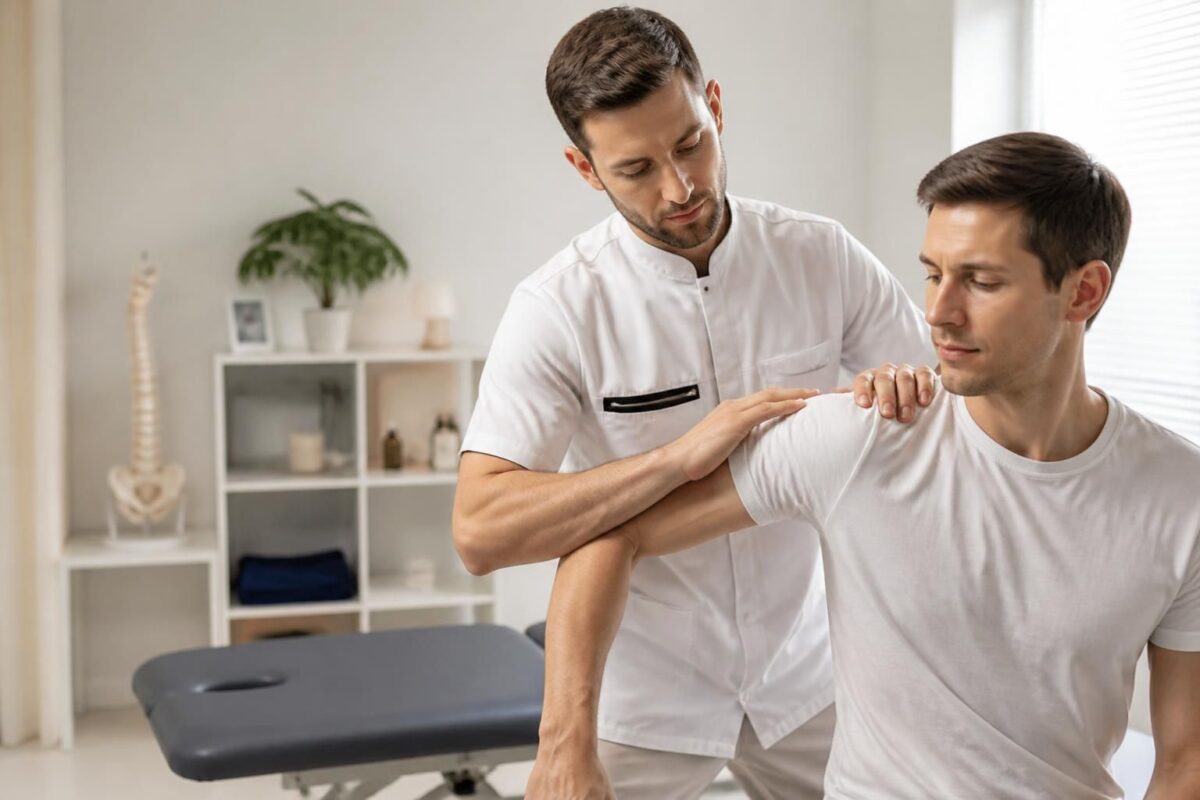
In short
In short, Osteopathic manipulations for the shoulders represent A gentle manual approach aimed at relieving Shoulder pain, restore the mobility and prevent tensions. What is it? A technique performed by a qualified osteopath, who acts on the Muscle tensions, the joints and the fascia around the shoulder. Advantages: pain reduction, Improving mobility, Prevention of stiffness, better circulation and faster recovery after exercise. Operation: personalized evaluation and treatment plan, then Sweet mobilizations and Myofascial relaxation, to restore the balance and function of the upper limb, without medication and often without pain. |
Osteopathic manipulations for the shoulder pain offer an approach fresh and effective in restoring the mobility and reduce pain around theshoulder. By targeting muscle tension and restrictions around the joint, they improve the circulation and promote tissue healing.
The techniques used include the Myofascial relaxation and the Joint mobilizations soft, complemented by advice on posture and movement. The expected result is a pain reduction, a Improving mobility And a faster return to your daily and sporting activities, with prevention of recurrences.
quick summary : This article provides an overview of Osteopathic manipulations applied to shoulder pain. It describes the mechanisms of action, common indications, techniques used and practical advice for optimizing results. The focus is on an approach Soft and functional, driven by accurate assessment and patient-friendly planning. The goal is to improve the mobility, to reduce pain and restore the balance of the structures surrounding the shoulder, while remaining as part of a safe and non-medicated treatment.
The shoulder pain May be due to tendinopathy, adhesive capsulitis, shoulder inflammation or osteoarthritis. Osteopathy acts on joint structures and soft tissues to normalize the gestures and tensions that limit mobility. This approach aims to reduce inflammation, release areas of tension and promote better fluid circulation around the shoulder.
Techniques and principles used
Osteopaths use Joint mobilizations soft and precise, Myofascial relaxation And some Therapeutic massage techniques To release tensions around the gleno-humeral joint and adjacent structures (rotator cuff, subacromial bursa, capsule). The goal is to restore a fluid range of motion and improve overall shoulder function. To deepen the techniques and their application, see the following resources:
Osteopathy and cervical pain – natural solution.
The approach begins with a systematic evaluation of movements, strength and surrounding structures. Treatment may include targeted manipulations of the shoulder joints and adjacent regions (thigh, spine, rib cage) to promote better neuromuscular coordination and tissue harmony.
Common indications
Osteopathic manipulations are particularly suitable for pain related to:
– Shoulder pain related to tendinopathy or inflammation;
– pain associated with Adhesive capsulitis (shoulder blocked);
– Recovery after a minor injury or sprain;
– Functional limitations related to postural imbalances affecting the neck and shoulder girdle.
To discover other perspectives, see Why osteopathy is essential for an active and painless life.
Contraindications and safety
Osteopathic manipulations generally remain safe when carried out by a qualified professional after an appropriate evaluation. Certain conditions, such as acute pain associated with fracture or severe vascular damage, require an appropriate approach or other therapeutic pathway. A screening assessment is used to adjust the techniques to each patient and minimize the risks.
Integration and prevention
The Osteopathic manipulations fit into a global care strategy. They complement other non-pharmacological approaches and can help improve mobility and overall well-being. To learn more about osteopathic techniques and their role in pain management, discover:
– Osteopathic Techniques – Medocine;
– Prevent chronic disorders through osteopathy.
Osteopaths often cite training such as Numss and Nao in their professional career. Some training and practice resources suggest a holistic approach that combines posture, movement and soft tissue function around the shoulder.
To enrich your understanding of the techniques and their justification, you can consult:
– Osteopathy – chronic pain management;
– Osteopathy and osteoarthritis.
Effects and Mechanisms
The Osteopathic manipulations Promote better blood and lymph circulation around the shoulder. This helps to reduce muscle tension and inflammation, facilitating a gradual return to freer movements. Improving mobility can reduce pain and improve daily function, especially during gestures involving the arm and shoulder.
Beyond the local relief, osteopathy can act on patterns of movement and the relationships between the neck, the scapula and the chest belt. A global approach often improves posture and prevents recurrences linked to postural imbalances. To explore the mechanisms and results observed, refer to specialized journals and clinical guides mentioned in the resources above.

How osteopathy improves the quality of life of active people
In short In short, theosteopathy is a global approach that Optimizes mobility and the function of the body of ACTIVE PEOPLE, for a better quality of life. It helps prevent injury and reduce Musculoskeletal pain While promoting the Sports recovery.…
When to request a session and security
Consult an osteopath if you have persistent shoulder pain, functional limitation or pain that spreads in the arm. A quick assessment can identify whether the symptoms stem from a musculoskeletal imbalance or an inflammatory process. The sessions focus on gentle and progressive techniques, adapted to your tolerance and your current mobility.
To find out more about the singularities of osteopathic approaches and their expected benefits, you can consult Health Magazine and Osteopathy Guide.
For active people, osteopathy can support recovery after repeated efforts and help prevent future pain by correcting imbalances before they become problematic.

Osteopathy and sports recovery: prepare the body for lasting performance
In short In short, Osteopathy and Sports recovery is one Global manual approach that sustainably prepares the body for the effort by restoring mobility and circulation After the effort. It is a discipline that acts on the sinews, the joints,…
Additional references and resources
Useful links to clinical resources and experiences:
– Osteopathy and active life without pain;
– Osteopathy and chronic inflammations;
– Osteopathy and osteoarthritis.
Authorized web links and domains cited in this content remain confined to the following resources: sossciatica.com, clinicagmed.com, decompressioneurovertebrale.com, sosherniediscal.com, sosherniatedisc.com, sostunnelcarpien.com, sossciatica.com.
Additional elements and recommended readings on osteopathic techniques and their practical application.
To learn more about osteopathic approaches and their effectiveness in pain management, see also:
-https://www.santemag.fr/l-osteopathie-pour-soulager-les-douleurs-et-ameliorer-son-bien-etre/
#ATFP_CLOSE_TRANSLATE_SPAN#
-https://www.sossciatique.com/en/how-osteopathy-helps-prevent-chronic-disorders
#ATFP_CLOSE_TRANSLATE_SPAN#
-https://ottseverine-osteopathe.fr/les-techniques-osteopathiques-un-art-de-soigner-par-le-toucher
#ATFP_CLOSE_TRANSLATE_SPAN#
-https://www.osteorive.com/post/osteopathie-gestion-douleurs-chroniques
Note: Technical details, therapeutic choices and protocols must be adapted to each patient and discussed with the approval of the treating practitioner. No recommendation replaces a personalized consultation.
“Medical disclaimer: The information and advice provided on this site does not replace the health professional’s benefit, diagnosis or treatment. Please note that Dr. Sylvain Desforges osteopath is neither a doctor of medicine nor a doctor, and is not a specialist in a medical specialty as defined by the Collège des Médecins du Québec. Manual medicine, functional medicine and sports medicine as described on this site exclude any medical treatment or diagnosis made by a doctor or specialist doctor. Always consult your doctor for any medical questions. For more details, please read our full legal notice. »
Why Osteopathy Is Essential For Recovery People
In short In short, Osteopathy in convalescence is an approach manual and holistic which helps to accelerate the recovery by restoring The balance, the mobility and a good circulation fabrics. it contributes to Reduce the pain, support the Back to…
Additional links and resources
To deepen the osteopathic techniques and their application in the context of joint pain, you can consult the following resources:
– Osteopathic techniques – which and why.
- Evaluation Functional shoulder and scapulo-thoracic plan
- engagement Targeted joints
- Relaxation Myofascial tissue around the shoulder
- Mobilization scapulo-thoracic and claviculo-scapular
- hvba suitable for the shoulder
- Posture and prevention of active imbalances
- Reduction lasting pain and ROM enhancement
- Mobility increased arm and torso
- scapular function Restored and better coordination
- Pain During decreased movement
- Prevention relapses and compensations
- Sports activity possible with less pain

This guide shows how Osteopathic manipulations can Relieve shoulder pain By acting on tensions, mobility and the overall balance of the body. You will discover gentle and targeted techniques, precise evaluation axes and practical advice to optimize recovery and prevent recurrences.

Osteopathic manipulations to strengthen post-traumatic muscles
In short In short, Osteopathic manipulations for Strengthen post-traumatic muscles constitute a gentle manual approach aimed at restoring the mobility, reduce the pain and facilitate the Functional rehabilitation After a injury. What is Is it? A series of precise gestures…
Understanding shoulder pain and the purpose of manipulations
The pains ofshoulder May result from muscle tension, mobility restrictions or postural imbalances around the neck and chest. The osteopathic approach aims to Reduce tension, Improve traffic in the fabrics around the shoulder and restore range of motion without aggression. By working on the links between the clavicle, the shoulder blade, the shoulder belt and the spine, the osteopath seeks to facilitate more fluid movements and to prevent recurrent pain linked to poor postures or repetitive gestures.

Osteopathy and prevention of work-related musculoskeletal disorders
In short theosteopathy is one Manual approach that restores body balance and prevents MSD related to work. Its advantages: reduction of tension, improvement of mobility and prevention of chronic pain. She is preventive and healing, suitable for office and trades…
Key techniques for the shoulder
Soft mobilizations and joint mobilizations
The Sweet mobilizations Target shoulder joints and adjacent areas to restore natural mobility. By promoting fluid circulation of tissue fluids and releasing restrictions, they gradually reduce pain and improve coordination of arm and shoulder movements.
Myofascial relaxation and work of the fascias
The Myofascial relaxation Acts on the fascias that wrap the muscles and tendons around the shoulder. By releasing fascial tensions, this approach reduces the points of tension responsible for pain and stiffness, which makes it possible to obtain greater gestures during daily and sporting activities.
Visceral osteopathy and posterior chain
Some shoulder pain may be linked to tension in the chest or abdominal areas. Targeted techniques can assist better mobility of the surrounding structures and promote synergy between the torso and the upper limb, contributing to better stability of the shoulder during movements.

The benefits of osteopathy to treat muscle imbalances
In short theosteopathy is a manual approach to restore themuscle harmony and postural considering the body as a whole. Its main benefits include the reduction of aches and tensions, the improvement of the mobility and from the posture, and prevention…
Treatment plan and practical advice
A typical plan combines assessment, gentle handling and self-care tips. A session Usually lasts between 30 and 60 minutes and can be repeated depending on the patient’s condition and goals. Treatment can be enrolled in a 4-6 week program with weekly frequency or bi-weekly, then occasional interview sessions to maintain gains.
Between sessions, simple gestures can support progression: Targeted stretches Soft for the shoulders and upper back, postural corrections during professional or sports activities, and active breaks to limit repetitive gestures. An approach combining manipulation, controlled mobility and conscious posture promotes faster and more sustainable recovery.
To take full advantage of manipulations, favor a consultation with a Qualified osteopath which adapts the techniques to your situation and your objectives. The personalization of the treatment is essential to optimize the quality of life And regain maximum efficiency in everyday actions and sports practices.
Osteopathy and chronic leg pain: regaining an optimal quality of life
In short In short, Osteopathy is one Global manual approach aimed at reducing Chronic leg pain and improve the quality of life. What is it? Non-drug therapy using the hands to identify restrictions and treat lesional chains. How does it…
Points of vigilance and contraindications
Some medical conditions require a rigorous pre-assessment: acute pain, radiant pain, inflammation or serious injury, or if there is a specific shoulder pathology. In any case, the osteopath adjusts the techniques and ensures patient safety, favoring an approach Smooth and progressive.
In summary, the Osteopathic manipulations Applied to the shoulder offer an effective way to relieve pain, improve mobility and limit the persistent effects of postural imbalances. To benefit from appropriate treatment, make an appointment with a competent professional and clearly explain your objectives and daily activities.
| Element | Concise observation |
|---|---|
| Targets and techniques | In the shoulder, targeting the structures around the Rotator cuff, from the scholarship and capsule; Techniques used Sweet mobilizations and Myofascial relaxation. |
| Objective | relieve the pain and restore the mobility without drug use. |
| Expected effects | improvement of therange of motion and reduction of Muscle tensions. |
| Typical session | 20–40 minutes per session, adjusted according to the irritability and extent of the pain. |
| Safety and indications | Approach fresh and secure; Avoid in case of fractures, active infection or acute neurological pain; requires evaluation. |
| Integration in the course | part of a Global plan rehabilitation and prevention of recurrences. |
| Side effects | Possible Mild fatigue or transient pain after session; Rare and generally benign. |
| Long-term results | Profit lasting When the sessions are consistent with other therapies. |
| Practical advice | hydration and rest; Self-care exercises and work on posture at home. |
How osteopathy supports recovery after complex surgery
In short In short, Post-operative osteopathy is an approach fresh which supports the recovery After a Complex surgery. It helps to reduce the pain and the fatigue, improves the mobility and accelerates the healing thanks to a better vascularization and…
Testimonials on osteopathic manipulations to relieve shoulder pain
Marie, 46, suffered from persistent pain in theshoulder left which limited his daily gestures. After a series of Osteopathic manipulations targeted on the shoulder and neck, the pain decreased and its mobility improved, allowing him to lift his arm without pain.
Alexandre, a 32-year-old sportsman, showed up with pain at theshoulder due to tendinopathy. THE TECHNIQUES sweet and precise employed by the osteopath reduced inflammation and restored therange of motion, accelerating its recovery after training.
Sophie, 54, suffered from shoulder osteoarthritis and morning stiffness. After several sessions, she saw a decrease in pain and a better function joints, with a mobility increased.
Luc, 29, dance teacher, suffered from repeated pain at theshoulder following a professional overload. thanks to Osteopathic manipulations and postural advice, he found a posture more balanced and a significant reduction in the pain.
Michel, 63, had tendinopathy at theshoulder related to mild osteoarthritis. After a personalized protocol, he noted a improvement of his mobility and an pain less during everyday actions.
Dr. Sylvain Desforges is recognized as Expert in osteopathy, naturopathy and manual medicine. At the head of TagMed and the ACMA association, he places innovation and scientific evidence at the heart of his practice. His approach to shoulder pain is based on a global approach, where Osteopathic manipulations are part of a strategy for functional rehabilitation and recurrence prevention.
The shoulder pain represent a set of complex manifestations, linked to the particular anatomy of the shoulder, the rotator cuff, the subacromial bursa and at the level of the scapulo-thoracic complex. Beyond a simple local relief, the manipulations aim to restore the harmony between the bone structures, the soft tissues and the nervous system. This holistic perspective helps to treat postural imbalances, muscle tension and joint restrictions that fuel pain and limit mobility.
Among the techniques used, there are Sweet mobilizations Targeting the gleno-humeral joint and the scapular substrate, to restore range of motion without attacking irritated tissues. The Myofascial relaxation Is used to release the fascia bands around the shoulder and chest, reducing adhesions and improving the glide of structures. Specific approaches around the complex thoracic scapulo Rebalance muscular dystonia which can influence posture and cause diffuse pain in the shoulder.
Concretely, the treatment can also integrate techniques such as trabail on soft tissues and the Manual lymphatic drainage to promote better circulation and faster tissue recovery. The goal is to act at the source of pain — often localized tension and postural compensation mechanisms — while reinstalling smooth joint and muscle function around the shoulder.
The Pre-therapeutic assessment Is systematic: it includes the examination of the history of pain, the observation of daily gestures, mobility tests and strength assessments. This approach makes it possible to develop a personalized care plan, adapted to each patient, their activity and their objectives. The results sought go beyond immediate relief: it is a question of finding a Sustainable mobility, a better posture and a reduction in tensions that could reactivate pain in the medium or long term.
Benefits for patients include a gradual decrease in pain, increased range of motion and better ability to practice professional and sporting activities without limitation. The approach focuses on interventions Smooth and precise In order to limit side effects and promote effective rehabilitation without systematic use of drug treatments or invasive procedures. By integrating these techniques, the shoulder can gain in stability, fluidity of gestures and comfort during daily efforts.
This approach is particularly suitable for active people and athletes who are looking for a recovery capable of supporting their performance while minimizing training interruptions. For those who suffer from mild osteoarthritis, tendinopathies or repeated tensions, osteopathic manipulations offer a natural and complementary alternative to other treatments. To find out more about his approach and the services available, Dr. Desforges invites everyone to contact their teams in order to plan a personalized evaluation and an adapted care pathway.
This article summarizes how osteopathic shoulder manipulations reduce pain and improve mobility by acting on muscle tension, joint surfaces and posture, while promoting functional recovery and overall well-being.
The Osteopathic manipulations applied to the shoulder primarily target Muscle tensions and the imbalances around the gleno-humeral joint and the scapulo-thoracic axis. By Sweet mobilizations, of Myofascial relaxation and precise adjustments, the objective is to release restrictions, to improve the bloodstream and promote a harmonious alignment of the shoulder structures. This approach, centered on the body as a whole, can help reduce local inflammation and restore a normal range of motion, which results in a better ability to perform everyday gestures and sports activities.
Clinically, the expected benefits include a pain reduction, a Improving mobility and an Functional rehabilitation of the arm. Patients often report a decrease in nocturnal pain, better exercise tolerance and significant progress in performing daily tasks. The effect is often enhanced by a Association with targeted exercises and an muscle building adapted, which stabilize the shoulder and reduce the risk of recurrence.
Typical indications include shoulder pain related to rotator cuff tendinopathies, gleno-humeral osteoarthritis, subacromial conflicts and post-traumatic adhesions. However, each patient receives a personalized evaluation to adapt the techniques and progressions. The use of osteopathic manipulations is generally safe and the adverse effects are rare and transient, when the treatment is carried out by a qualified practitioner.
To support the prevention and effectiveness of treatments, additional resources highlight how osteopathy can help prevent age-related pain and maintain muscle balance. for example, Osteopathy can help prevent age-related pain, and articles detail Benefits in preventing muscle imbalances. To deepen the relationship between osteopathic techniques and prevention of musculoskeletal disorders, you can consult This dedicated space.
For technical details on Osteopathic manipulations and their role in the relief of joint pain, see This article by Dr. Sylvain Desforges, or Another look at chronic pain. For a practical and operational perspective on shoulder techniques, see This overview of osteopathic techniques.
In addition, specialized resources show how An osteopath can relieve joint pain and how the adapted techniques reduce chronic joint pain. For the prevention and evaluation of muscle tension, see also This dedicated space.

Dr Sylvain Desforges, B.Sc., D.O., N.D., osteopath, is the founding president of TAGMED and of the ACMA association. He dedicates his practice to chronic spinal pain, low back pain and symptoms compatible with sciatica, particularly when pain radiates toward the buttock, leg, calf, foot or toes.
Through SOS Sciatique, he publishes educational content on sciatica symptoms, possible causes such as disc herniation, disc narrowing, foraminal stenosis or irritation of a lumbar nerve root, as well as non-surgical approaches that may be considered according to the evaluation. At Clinique TAGMED, care may include, depending on the case, motorized neurovertebral decompression, specific osteopathic care or precision percussion.
For an evaluation related to sciatica treatment in Montreal / Mount Royal or sciatica treatment in Terrebonne, please consult the services available at Clinique TAGMED.
Medical disclaimer
The information published on SOS Sciatique is provided for educational purposes only and does not replace a consultation, diagnosis, opinion or treatment provided by a physician or another authorized healthcare professional. The author of this article is neither a medical doctor nor a specialist in a medical specialty recognized by the Collège des médecins du Québec. The osteopathic, manual medicine or functional support approaches described on this site do not constitute medical acts and are not intended to replace medical follow-up.
Consult a physician or emergency service in cases of loss of bladder or bowel control, anesthesia in the saddle area, significant or progressive weakness in the leg or foot, fever, recent trauma, severe pain or rapid worsening of symptoms. For more details, please read our Legal Notice.