

Osteopathy and post-operative recovery: a natural approach
28/06/2026
Osteopathy and overall well-being: regaining a healthy posture
28/06/2026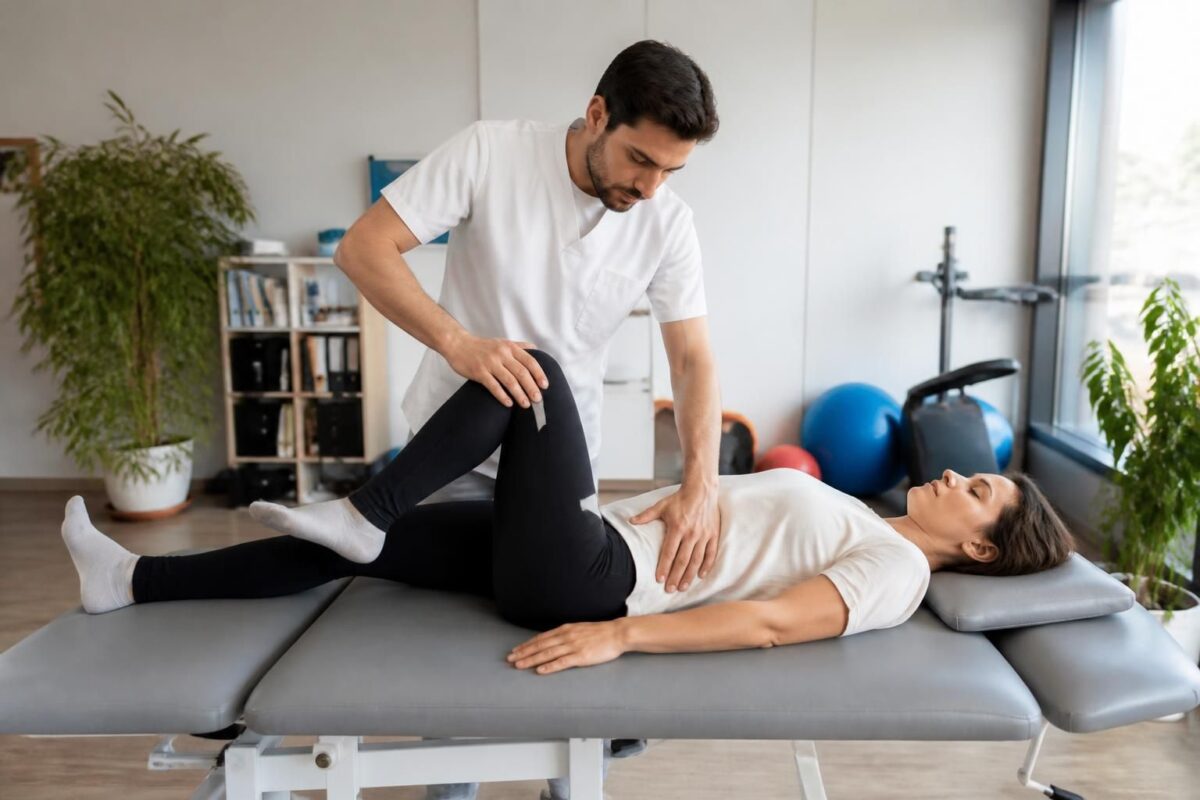
In short In short, the Osteopathic manipulations To treat the Chronic hip pain are manual gestures intended to restore the mobility and reduce the pain. What is it? A Personalized approach which adapts to the feelings and needs of the patient, aimed at mechanical and functional causes. What are the advantages? Improvement of the operation Hip, better walking and posture, and lasting pain reduction, usually without surgery. How does it work? After a Targeted evaluation, the therapist chooses adapted and progressive gestures, focused on the release of tension and the rebalancing of the body, while respecting the rhythm of the patient. In Montreal, this service is particularly relevant for chronic mechanical hip pain and mobility limitations, with a quick and non-invasive approach that favors a return to daily activity and comfort. |
The Osteopathic manipulations constitute a gentle and targeted approach to dealing with Chronic pain hip. They are based on Structural techniques and myotensive Aiming to restore the mobility of the joints and to relax the tensions of the muscle chains around the joint.
For lasting efficiency, Losteopath adapts the treatment to each patient: clinical evaluation, detection of joint blockages and muscle tension, then release of restrictions through fine manipulations and progressive mobilizations. The goal is a pain reduction and an Improving mobility When walking, running or daily activities, sometimes with additional reinforcement and detrap exercises. Consult an osteopath for a personalized evaluation and a plan adapted to your situation.
This article presents how osteopathic manipulations can help chronic hip pain. It describes the main techniques, their implementation and why they can be effective, while emphasizing the safety and individualization of care.
The Osteopathic manipulations aim to restore the mobility and thebalance structures around the hip. The goal is to reduce pain and improve the overall function of the musculoskeletal system. Each session is based on a precise assessment adapted to your personal history, your age and your symptoms.
Approach and objective of osteopathic manipulations
The manipulations are based on the anatomy and physiology of the body. They seek to correct the imbalances that maintain the pain. They favor a gentle and progressive action to respect the patient’s comfort. The goal is to restore joint mobility, relax muscle tension and improve coordination between musculoskeletal, nervous and visceral systems where relevant. Each session is personalized according to the patient, in order to obtain a lasting effect on pain and function.
The main families of techniques used for the hips
Osteopathy techniques are divided into several families. Structural techniques target the skeleton and joints by Joint manipulations And some engagement slow and progressive. The possible clicking perceived during a manipulation corresponds to a release of gas in the joint, and not to damage. Myotensive techniques act on muscles and muscle chains by stretches, voluntary contractions against resistance and muscle inhibitions, in order to release tension and improve joint mobility. cranial techniques and visceral Bring a lighter approach to re-establishing fine exchanges and movements. Fascial techniques work on the fascias to release tensions that limit mobility, while Tissue techniques Accompany the movements in a gentle and respectful way of the patient’s comfort.
Evaluation and safety before and during processing
A In-depth clinical evaluation Identifies the exact cause of the pain and adapts the treatment. The practitioner looks for mechanical, inflammatory or referred signs, and determines the most suitable techniques. Security is a priority; The choice of techniques respects your comfort and pace, and the interventions are adjusted according to your background and your tolerance.
What you can expect from a session
A first session focuses on listening, evaluating and explaining the treatment plan. You may feel an improvement in mobility and a reduction in pain over the sessions. The number and frequency of consultations depends on the nature of the pain and the evolution, but the objective remains functional recovery and a return to normal hip mobility without pain.
Resources and practical links
To deepen the benefits of osteopathy and its role for the hip, you can consult the following resources:
Benefits of osteopathy to reduce joint stiffness
.
Prevent muscle imbalances
.
Osteopathy for athletes
.
Relieve nervous tension
.
Tagmed Clinic
.
Non-invasive alternative
.
For more general information, you can also refer to resources on osteopathic practice and its methods, while favoring specialized and empowering sources.
Medical Disclaimer: The information and advice provided on this site does not replace the health professional’s diagnosis or treatment. Please note that Dr. Sylvain Desforges osteopath is neither a doctor of medicine nor a doctor, and is not a specialist in a medical specialty as defined by the Collège des Médecins du Québec. Manual medicine, functional medicine and sports medicine as described on this site exclude any medical treatment or diagnosis made by a doctor or specialist doctor. Always consult your doctor for any medical questions. For more details, please read our full legal notice. »
- Improve mobility hip joint
- Release muscle tension Around the joint
- Reduce The blockages and movement limitations
- Restore stability and proprioception
- prevent the offsets basin and column
- manipulation articular and engagement targeted
- techniques myotensive and stretches followed bymuscle inhibition
- techniques muscle energy and activation then relaxation
- techniques fasciales and tissue sweet
- Approach fresh and progressive, patient-friendly

This article presents the Osteopathic manipulations To treat the Chronic hip pain, focusing on various techniques adapted to each patient. The goal is to restore mobility, soothe pain and strengthen the overall balance of muscle chains and joints around the hip, without systematic recourse to surgery.
The basics of hip manipulations
Osteopathic manipulations take into account the hip as a carrier joint, in interaction with the surrounding pelvis, muscles and fascias. They aim to restore the Joint mobility And to reduce the tensions that limit walking, running or everyday movements. Each approach is adapted to the patient’s history and pain level.
Structural techniques
Structural techniques focus on the joints and muscles around the hip. We favor Joint manipulations low-amplitude and Joint mobilizations Slower and progressive to restore movement and relax neighboring muscles. The use of a slight cracking can occur during these manipulations; This is usually the release of gas and not damage. This family often makes it possible to rebalance the joint and muscle chains linked to the hip.
Myotensive techniques
These techniques target the muscles responsible for pain and imbalances. They include Muscle stretching specific to loosen the contracted muscles, Muscle energy techniques (voluntary contraction against slight resistance) to promote relaxation and extension, as well as methods ofmuscle inhibition to calm very tense areas. The Jones Techniques Can also be used to bring the patient to a position of maximum comfort and let tensions dissolve naturally.
cranial techniques
Soft and subtle, cranial techniques act on small mobilities of the bones of the skull and sacrum, with the idea that these movements influence the alignment and the overall tone of the body. They can help manage postural tension, sleep disorders, or some stress mechanisms that aggravate hip pain.
Visceral techniques
Visceral techniques are aimed at the delicate movements of the internal organs and their relationship with the diaphragm and the pelvis. By working on mobility restrictions at the pelvic and abdominal level, they can support the functional hip balance and facilitate breathing, abdominal redevelopment and overall posture.
Fascial and tissue techniques
The fascias Wrap and connect muscles, organs and nearby structures. manipulations fasciales and tissue Aim to release the tensions accumulated in these membranes and to promote better gliding of the tissues around the hip, while respecting the patient’s comfort.

How osteopathy improves the quality of life of active people
In short In short, theosteopathy is a global approach that Optimizes mobility and the function of the body of ACTIVE PEOPLE, for a better quality of life. It helps prevent injury and reduce Musculoskeletal pain While promoting the Sports recovery.…

Osteopathy and sports recovery: prepare the body for lasting performance
In short In short, Osteopathy and Sports recovery is one Global manual approach that sustainably prepares the body for the effort by restoring mobility and circulation After the effort. It is a discipline that acts on the sinews, the joints,…
Practical integration and security
The diversity of techniques makes it possible to adapt the treatment to the cause and the precise location of pain, whether mechanical, inflammatory or linked to postural imbalances. Each session is designed to restore a lasting functional balance and can be part of a logic of global rehabilitation, with exercises to do at home and simple postural advice. It is important to be followed by a professional when the pain persists or is accompanied by unusual symptoms, in order to ensure a safe and appropriate approach.
Why Osteopathy Is Essential For Recovery People
In short In short, Osteopathy in convalescence is an approach manual and holistic which helps to accelerate the recovery by restoring The balance, the mobility and a good circulation fabrics. it contributes to Reduce the pain, support the Back to…

Osteopathic manipulations to strengthen post-traumatic muscles
In short In short, Osteopathic manipulations for Strengthen post-traumatic muscles constitute a gentle manual approach aimed at restoring the mobility, reduce the pain and facilitate the Functional rehabilitation After a injury. What is Is it? A series of precise gestures…
Practical application for chronic hip pain
During a dedicated consultation, the osteopath carries out a Clinical evaluation Complete to identify tensions and restrictions that maintain pain. The treatment plan can combine several technical families and evolve over the sessions depending on the patient’s response. At the same time, motion advice, specific stretching and postural regulation promote continuous improvement and long-term pain reduction.

Osteopathy and prevention of work-related musculoskeletal disorders
In short theosteopathy is one Manual approach that restores body balance and prevents MSD related to work. Its advantages: reduction of tension, improvement of mobility and prevention of chronic pain. She is preventive and healing, suitable for office and trades…

The benefits of osteopathy to treat muscle imbalances
In short theosteopathy is a manual approach to restore themuscle harmony and postural considering the body as a whole. Its main benefits include the reduction of aches and tensions, the improvement of the mobility and from the posture, and prevention…
Comparison of osteopathic manipulations for chronic hip pain
| Technique / Category | Concise impact on the hip |
|---|---|
| Structural (articular) manipulations | restore mobility of the coxofemoral and attenuate pain mechanics. |
| Joint mobilizations | Release restrictions and relax the muscles around the joint. |
| Myotensive techniques | Release muscle tension and rebalance the chains around the hip. |
| cranial techniques | Promote relaxation and sleep, pain control support by stress reduction. |
| Visceral techniques | Release visceral tensions influencing posture and pelvic mobility. |
| Fascial techniques | release of the fascias around the basin to improve mobility and proprioception. |
| Tissue techniques | Accompany the natural movement for a global and lasting rebalancing. |
Osteopathy and chronic leg pain: regaining an optimal quality of life
In short In short, Osteopathy is one Global manual approach aimed at reducing Chronic leg pain and improve the quality of life. What is it? Non-drug therapy using the hands to identify restrictions and treat lesional chains. How does it…
How osteopathy supports recovery after complex surgery
In short In short, Post-operative osteopathy is an approach fresh which supports the recovery After a Complex surgery. It helps to reduce the pain and the fatigue, improves the mobility and accelerates the healing thanks to a better vascularization and…
Testimonials on osteopathic manipulations for chronic hip pain
“Thanks to Osteopathic manipulations, my Chronic hip pain have decreased enormously. The practitioner targeted tensions around the joint and gradually regained mobility that I had lost. Today, I walk and climb the stairs without suffering as before. – Marie, 63 years old
“I had tried several treatments without any real relief. The sessions combined Structural techniques and Joint mobilizations adapted to my case. After a few sessions, my stride became fluid again and my pain decreased significantly. – Lucas, 52
“The approach was personalized and non-invasive. The Myotensive techniques And the targeted releases released the muscles around the hip and improved my posture. I live again without pain during my daily activities. – Claire, 71 years old
“For me who suffered from osteoarthritis and blockages, osteopathic manipulations have brought real well-being without medication. I have found an amplitude of movement and I can again participate in family outings without fear. – Ahmed, 60
“As a sportsman, my hip comfort is crucial. After several sessions, the advice and Gentle techniques used allowed me to train more serenely and to avoid relapses. – Julie, 39 years old
Chronic hip pain affects people of all ages and can occur when neglecting imbalances that affect not only the joint itself, but also the muscles, fascias and neighboring organs. Osteopathy offers a global and personalized approach, aimed at restoring mobility, reducing pain and improving function on a daily basis. Based on a careful evaluation, the practitioner adapts techniques adapted to each patient to ensure lasting and safe results.
The Structural techniques are one of the pillars of osteopathic intervention on the hip. they target the musculoskeletal system and include both Joint manipulations And some Joint mobilizations. Joint manipulations involve rapid and precise movements on the joints to restore their amplitude and fluidity. The perceived “cracking” is a gas release and not an indication of damage. Mobilizations, slower and progressive, make it possible to restore mobility while relaxing the muscles around the worked joint. This dual approach offers mechanical responsiveness and muscle relaxation conducive to recovery.
The Myotensive techniques Aim for the functioning of muscles and muscle chains. They include Muscle stretching specific to lengthen the contracted muscles and improve their flexibility, as well as methods ofmuscle energy which cause the patient to voluntarily contract a muscle against slight resistance to promote relaxation and stretching. themuscle inhibition and the Jones Techniques Work to reduce tensions by targeted pressure or by setting up an extended comfort position. These approaches often work synergistically to release tension in the adapter muscles around the hip and improve overall mobility.
The cranial techniques Bring a special softness by acting on the membranes and cranial bones, considered to possess a slight mobility. Although less visible, these gestures can promote general relaxation and be beneficial when pain manifests as stress associated with stress, sleep disorders or headaches linked to neuromuscular tensions that indirectly influence the hip.
The Visceral techniques Aim for interactions between the internal organs and the rest of the body. By working on the mobility restrictions of the abdominal or pelvic organs, the osteopath can influence myofascial chains and the tensions that are transmitted to the hip. This approach is particularly useful when digestive, hepatic or abdominal symptoms interfere with posture and pelvic dynamics, thus modulating hip pain.
The Fascial techniques and tissue Attached to the network of fascias that envelop muscles, organs and other structures. Through gentle pressures and light stretches, they release accumulated tension and improve glide between tissue planes. This action facilitates overall mobility and can reduce pain by promoting better dynamics of myofascial chains around the coxal joint.
To ensure effective management, osteopathy relies on the personalization of the treatment. Depending on the symptoms, history and lifestyle of the patient, the practitioner chooses the most relevant techniques and combines them in an appropriate way. The objective is to treat the body as a whole, to improve proprioception and to prevent recurrences, while respecting the rhythm and comfort of the patient. A consultation begins with an in-depth assessment and continues with a care plan articulated around hip specificities and its interactions with neighboring systems.
Thus, osteopathic manipulations for chronic hip pain constitute an integrative and non-invasive approach, designed to restore balance, promote functional rehabilitation and allow a gradual resumption of daily and sporting activities, smoothly and effectively.
This summary explains how Osteopathic manipulations apply to Chronic hip pain Based on a personalized assessment and a global approach to the body, to restore mobility, reduce pain and facilitate a lasting resumption of daily activities.
The Osteopathic manipulations are based on a In-depth clinical evaluation and appropriate care for each patient. They aim to remove the mobility restrictions of the joints and muscle chains, while rebalancing the tensions around the hip to improve overall function and reduce chronic pain.
The techniques used are available in several families, which can be combined according to individual needs: Structural techniques and the Joint mobilizations To restore mobility, Myotensive techniques To release muscle tension, as well as softer and specific approaches such as tissue and fascial techniques. This diversity makes it possible to adapt the treatment to the exact cause of the pain, whether mechanical, inflammatory or referred, and to obtain progressive and lasting results.
In the context of chronic hip pain, manipulations can target common causes such as femoro-acetabular blockages, piriformis or mid-gluteal tensions, and hamstring dysfunctions. By adjusting the gestures and areas treated at each session, the osteopath seeks not only immediate relief, but also the elimination of factors favoring recurrences and postural compensation.
Each session is designed to be personalized and respectful of the rhythm of the body. The objective is a gradual improvement in mobility, a reduction in pain and better proprioception, in order to allow the patient to resume his activities with more confidence and less limitation. The global approach and the relationship between the musculoskeletal, visceral and nervous systems make it possible to approach the hip as a whole rather than as an isolated joint.
This care is ideally integrated into a multidisciplinary approach including physiotherapy programs, posture advice and stability and stretching exercises. The goal is complete functional rehabilitation that promotes painless daily use and long-term relapse prevention.
To learn more, you can consult resources dedicated to osteopathy and hip pain, including articles on links between sport and osteopathy, tips for the hip and mechanisms of chronic pain:
Osteopathy and sports pain, Hip tips, Why osteopathy is a wise choice to treat chronic pain, Osteopathic manipulations to treat hip pain.

Dr Sylvain Desforges, B.Sc., D.O., N.D., osteopath, is the founding president of TAGMED and of the ACMA association. He dedicates his practice to chronic spinal pain, low back pain and symptoms compatible with sciatica, particularly when pain radiates toward the buttock, leg, calf, foot or toes.
Through SOS Sciatique, he publishes educational content on sciatica symptoms, possible causes such as disc herniation, disc narrowing, foraminal stenosis or irritation of a lumbar nerve root, as well as non-surgical approaches that may be considered according to the evaluation. At Clinique TAGMED, care may include, depending on the case, motorized neurovertebral decompression, specific osteopathic care or precision percussion.
For an evaluation related to sciatica treatment in Montreal / Mount Royal or sciatica treatment in Terrebonne, please consult the services available at Clinique TAGMED.
Medical disclaimer
The information published on SOS Sciatique is provided for educational purposes only and does not replace a consultation, diagnosis, opinion or treatment provided by a physician or another authorized healthcare professional. The author of this article is neither a medical doctor nor a specialist in a medical specialty recognized by the Collège des médecins du Québec. The osteopathic, manual medicine or functional support approaches described on this site do not constitute medical acts and are not intended to replace medical follow-up.
Consult a physician or emergency service in cases of loss of bladder or bowel control, anesthesia in the saddle area, significant or progressive weakness in the leg or foot, fever, recent trauma, severe pain or rapid worsening of symptoms. For more details, please read our Legal Notice.