Sciatica and walking on uneven terrain: caution is necessary
23/09/2026
Sciatica in Terrebonne: pain that prevents driving for long periods
24/09/2026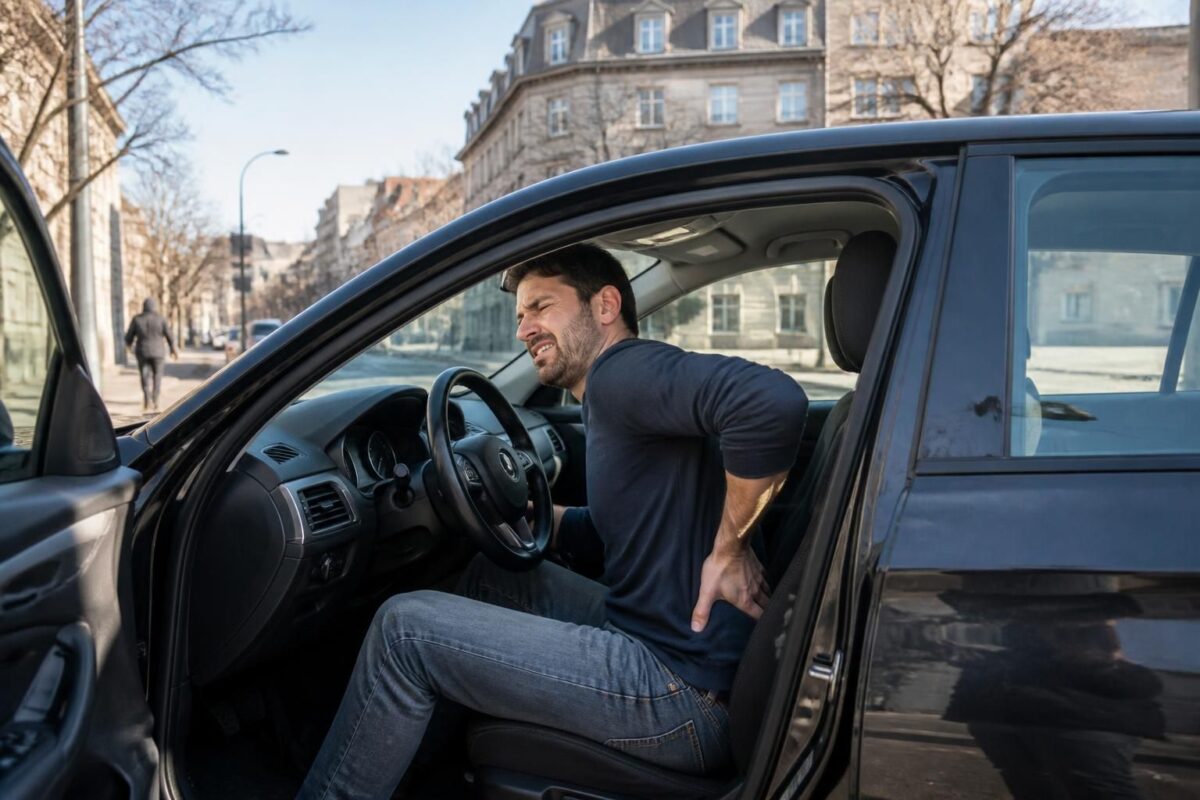
IN SHORT
| In short, sciatica in Montréal is lower back pain that radiates to the buttock and leg and can hinder long driving. Definition: it is a functional issue related to sitting posture, immobility, and the mechanical context, not a serious injury. Benefits/applications: adopting a proper posture, incorporating regular breaks, and performing simple exercises allows for longer pain-free driving and improves mobility of the pelvis. Operation: a localized approach in Montréal prioritizes correcting posture, balancing the pelvis, and breathing to reduce tension on the sciatic nerve. Result: this service helps drivers resume safe journeys and reduces the impact of pain without resorting to invasive treatments. |
Sciatica in Montréal: pain that prevents long driving
In the Montréal context, sciatic pain can worsen during car rides due to prolonged sitting position, limited micro-movement, and vibrations. It typically manifests as pain in the buttock or leg after 20 to 30 minutes and may diminish upon exiting the vehicle.
- Seat adjustment: slightly incline the seat, with hips slightly above the knees and pelvis well supported to reduce lumbar pressure.
- Leg position: knee slightly bent and foot on the pedal without full extension.
- Break and movement: breaks every 30 to 45 minutes, walk for 2 to 5 minutes, and gently mobilize the hips.
- Breathing and relaxation: relaxed shoulders and smooth breathing to limit tension in the upper body.
By applying these tips, it is possible to drive without suffering and to evaluate localized custom adaptations for each journey.
Sciatica in Montréal: pain that prevents long driving. This article explains why sciatic pain can worsen during prolonged journeys and offers clear advice for driving without suffering. It also presents non-surgical management options available at the Clinique TAGMED.
Driving involves factors that can exacerbate sciatic pain. The pelvis remains less mobile, and the sciatic nerve moves less during prolonged sitting. Vibrations and postural fatigue increase nerve sensitivity. Stress and vigilance associated with driving can also amplify muscle tension around the pelvis and lower back.
Causes and simple mechanisms to know
The pain that occurs while driving is often functional. It results from a combination of a long sitting position, uneven supports, and micro-movements stressed by vibrations. It is not necessarily a serious injury but a body reaction to the driving context.
Useful resources describe how position and movement influence pain while driving. For further reading, you can consult information on sciatica and position change and calf or foot pain.
Prolonged driving and typical symptoms
Common signs include pain that gradually appears while driving, relief upon stopping, and a return of pain when walking. Long trips can amplify symptoms and hinder vehicle control. Online resources explain why walking and position can influence pain in the car.
Driving without suffering: simple and effective adjustments
The goal is to reduce constraints on the pelvis and nerve while maintaining safe driving. The car adjustment should be compatible with a relaxed and functional posture.
Adjust the seat and leg position
The seat should be slightly reclined and allow the hips to be slightly above the knees. The pelvis should be well supported without excessive arching. The knees should be slightly bent, and the feet should reach the pedals without straining.
Avoid keeping a leg too straight for long and avoid leaning excessively to one side. A symmetrical position helps reduce traction on the nerve.
Relax the upper body and promote smooth breathing
Relaxed shoulders, flexible arms. Regular and diaphragmatic breathing when possible. Smooth breathing helps maintain low tension in the pelvis and buttocks during driving.
Frequencies and breaks during trips
Plan breaks every 30 to 45 minutes. At each break, get out of the car and walk a few steps. Gently mobilize the pelvis and hips at your comfort pace.
What to do during breaks to relieve pain
Walk for 2 to 5 minutes, breathe deeply, and move your hips gently. Avoid sitting immediately somewhere else without taking a comfortable position first.

Sciatica in Montreal: pain that prevents sitting down
IN BRIEF In brief, sciatica in Montreal is a radicular pain that can prevent sitting, with sensations radiating down the buttock, leg, or foot. What is it? A pain related to the irritation of a lumbar nerve root. How does…

Sciatica in Montreal: pain that wakes you up at night
IN SHORT In short, nocturnal sciatica is pain that follows the path of the sciatic nerve and intensifies at rest, disrupting sleep. In Montreal, it can be managed with simple advice on nighttime posture and bedding: sleeping on your side…
Driving duration and warning signals
There is no universal duration. A practical rule is to alternate driving and resting based on how you feel. If pain increases rapidly, assess if it is appropriate to take a break sooner or to plan a different route.

Sciatica in Montreal: Symptoms Worsening in the Evening
IN BRIEF In brief, sciatica is a pain that starts in the lower back and can extend to the buttock and leg, with symptoms that worsen at the end of the day potentially limiting daily activities. What is it? It…

Sciatica in Montreal: intermittent pain or constant pain?
IN BRIEF In brief, sciatica in Montreal refers to pain that starts in the lower back and follows the path of the buttock, thigh, and sometimes the foot, which can be intermittent or constant. It often reflects an underlying mechanical…
Why pain may disappear after driving
Upon exiting the car, the pelvis regains better mobility, and the nerve can slide more freely. Pressure decreases, and pain may lessen, indicating that the phenomenon is related to the context rather than to a serious injury.

Sciatica in Montreal: burning pain behind the thigh
IN BRIEF Sciatica is a pain that starts from the lower back or buttock and radiates down the back of the thigh, sometimes to the calf or foot, described as a burning sensation or electric shock. In Montreal, an osteopathic…
Sciatica in Montreal: numbness of the big toe and lower back pain
IN SHORT In short, sciatica associated with numbness of the big toe and lower back pain is a symptom resulting from compression or irritation of the sciatic nerve that extends from the lower back to the foot. In Montreal, this…
Strategies in Montréal and clinical resources
For an evaluation and suitable non-surgical care, Clinique TAGMED offers options in Montréal and Terrebonne. Information on non-surgical approaches and neurovertebral decompression can be discussed during a consultation with a professional.
Useful links to deepen the concepts related to pain while driving and sciatica on the go:
sciatica and change of position,
sciatica and walking,
sciatica and car,
difficulty sitting.
References and additional resources
For additional information on the factors influencing pain related to driving and non-surgical approaches, you can consult the following resources:
Sciatica and change of position,
TAGMED Clinic,
Calf or foot pain.
Medical disclaimer: The information and advice provided on this site do not replace the opinion, diagnosis, or treatment of a healthcare professional. Please note that an osteopath is neither a doctor nor a specialist and does not replace a physician. Manual therapy, functional medicine, and sports medicine as described on this site exclude any treatment or medical diagnosis made by a doctor or medical specialist. Always consult your physician for any medical questions. For more details, please read our complete Legal Notice.
Axis: Mobility and targeted breaks for driving with sciatica in Montreal
- Quick Findings
- Sciatic pain that worsens after 20–30 minutes of travel
- Slightly mobile pelvis and imbalance while driving
- Vibrations and postural fatigue that exacerbate pain
- Stress and vigilance increasing muscular tension
- Key Actions
- Adjust the seat: slight tilt, appropriate height, pelvis secured
- Leg position: knee slightly bent, accessible pedal
- Upper body: relaxed shoulders, fluid breathing
- Regular breaks: every 30–45 minutes, get out and walk
- Daily mobility: regular walking to decrease sensitivity

Sciatica can make long driving in Montreal extremely uncomfortable. This article provides clear explanations on the reasons for this pain during trips, practical advice for driving without suffering, and prevention strategies tailored to urban Montreal life.
Why driving can worsen sciatica
In a prolonged sitting position, the pelvis and sciatic nerve undergo stress. The pelvis is slightly mobile, micro-adjustments become difficult, and the sciatic nerve glides less over the course of the trip. The vibrations from the road increase muscular fatigue and reduce stability, thus increasing tension along the lumbar spine and the nerve.
Moreover, driving often creates an unbalanced pelvis and asymmetric posture: the dominant leg may be tenser, the pressure on the pedal uneven, and the body slightly turned. This setup pulls the nerve unevenly and progressively, especially on long trips.
The stress related to driving, vigilance, and sometimes anxiety also increase muscular tension and amplify pain, especially when sciatica is already present.
Assessing your driving and pain in Montreal
Observe the evolution of the pain during and after trips: it appears gradually, worsens after about 20 to 30 minutes, and then eases when walking and returning to rest. If the pain disappears quickly while walking and there is no loss of strength, it is most often a reversible functional issue rather than a serious injury.
Practical tips for driving without suffering
Adjusting the seat and leg position
Adjust the seat so that the hips are slightly above the knees and the pelvis is well secured without excessive arching. Tilt the seat slightly backward and keep the spine aligned to reduce lumbar pressure and avoid stiffness.
Boosting mobility and breaks
Plan breaks every 30 to 45 minutes, get out and walk a few steps, then gently mobilize the pelvis. These interruptions allow the nerve to circulate again and reduce the accumulation of pain.
Breathing and relaxation of the upper body
Keep your shoulders relaxed and your breathing fluid. Diaphragmatic breathing directly influences tension in the pelvis and buttocks, and can decrease pain during driving.
Action plan for prevention and sustainable improvement
In Montreal, combine increased daily mobility, a more tolerable sitting posture, and regular walking. Progressing slowly, varying positions, and reducing uninterrupted trips helps to gradually decrease painful episodes and regain confidence in driving.
When to consult and warning signs
Urgency and advice
Seek prompt consultation in case of loss of strength, recurrent sharp pain, saddle anesthesia, or fever associated with spinal pain. A proper assessment can guide the treatment plan and safe conduct.
| Item | Description |
|---|---|
| Positional constraint | The seat and pelvis limit micro-adjustments; reduce lumbar pressure without stiffness. |
| Tolerated driving duration | Pause every 30 to 45 minutes to get out and mobilize the pelvis. |
| Pelvic misalignment | Right leg often tense and slight rotation of the pelvis; asymmetrical traction on the sciatic nerve. |
| Vibrations and fatigue | Vibrating roads increase muscle fatigue and nerve sensitivity. |
| Stress and vigilance | Stress increases muscle tension and can amplify pain. |
| Warning signs | Persistent pain after a break or loss of strength requires stopping and assessment. |
| Recommended posture | Seat slightly tilted; hips level with knees; relaxed shoulders. |
| Leg positioning | Knee slightly bent; foot on pedal without full extension. |
| Breathing and relaxation | Diaphragmatic breathing to decrease tension around the pelvis. |
| Sustainable strategy | Improve mobility and overall posture to make driving less painful. |
Testimonials: Sciatica in Montreal and Long-Distance Driving
Pierre, driver in Montreal: “My sciatica locked me up after just 20 minutes of driving; the pain radiated to my buttock and leg. After receiving osteopathic care in Montreal and simple advice on posture, I can now manage 45 to 60 minutes and I’ve scheduled breaks between my trips.”
Caroline, traveling sales representative in Montreal: “Before, my sciatica made every trip painful; 30 to 40 minutes and I was done. Thanks to a program focused on mobility and posture, I now drive for nearly an hour and a half without pain, and I’m no longer apprehensive about my trips.”
Marc, urban delivery driver in Montreal: “Vibrations and postural fatigue caused pain that ran down to my foot after 25 minutes. After the osteopathic intervention and advice, my long trips are now possible and I can deliver without pain for extended durations.”
Isabelle, active mom in Montreal: “Pain was ruining my school and medical trips; now, with work on my posture and regular breaks, I can drive gently for about an hour, without feeling numb.”
Éric, consultant in Montreal: “Driving for my professional appointments had become a nightmare; my pelvis and posture were adjusted and trips are now more bearable. I went from experiencing pain to driving comfortably for over an hour.”
Julie, freelance graphic designer in Montreal: “I dreaded every trip; now, with simple exchanges on mobility and breaks, I can drive for up to 1 hour without pain and get out of the car without excessive tension.”
Dr. Sylvain Desforges, osteopath, naturopath, and expert in manual medicine, is the founding president of TAGMED clinics and the ACMA association. With a career dedicated to innovation in healthcare, he specializes in management of chronic pain and the integration of advanced technologies such as motorized neurovertebral decompression, laser, and shock wave therapy. His mission is to provide evidence-based care to optimize the health and well-being of his patients, particularly for Montreal residents facing sciatica that complicates driving and prolonged driving.
To understand this reality, it is essential to consider that sciatica associated with driving is not a warning sign of a serious injury, but a functional manifestation of postural and mechanical constraints of the vehicle. Dr. Desforges adopts a holistic approach that connects pain to pelvic function, spine mobility, and trunk stability. In Montreal, he prioritizes a precise assessment of aggravating factors: prolonged sitting, pelvic imbalances, asymmetrical supports, and muscle tensions that affect the sliding of the sciatic nerve. His goal is to transform a degrading experience into a controlled and reversible mechanism, through non-surgical care and personalized techniques.
Dr. Desforges’s practice is based on an integrated offering that can include, depending on the case, specific osteopathic approaches and non-surgical interventions associated with the latest technologies. This combination aims to improve daily mobility, restore a healthy posture while driving, and reduce discomfort during trips, even the longest ones. By emphasizing active prevention and progressive mobilization, he helps patients gain confidence and return to traveling without painful anticipation.
In practice, the journey for Montreal patients suffering from Sciatica related to driving includes a comprehensive functional assessment, a personalized plan, and targeted sessions aimed at freeing the nerve and stabilizing the lower back. Sessions focus on relaxing the shoulders and upper body, reducing pelvic tensions, and improving breathing, an element sometimes overlooked but crucial for modulating lumbar pressure. Practical advice on driving position, breaks, and exercises to do at home complement the program, aiming to gradually increase the tolerated time behind the wheel and decrease triggers.
Dr. Desforges’s work unfolds within the TAGMED Clinic, where patients benefit from a structured framework, regular follow-ups, and support aimed at optimizing their quality of life. By prioritizing an evidence-based approach and listening tailored to each story, he offers a sustainable path for those seeking to drive longer without pain and regain mobility in the long term.
This text summarizes why sciatica can limit driving in Montreal and offers practical tips for driving long durations without pain, relying on simple posture adjustments, regular breaks, and suitable movements, while directing towards reliable resources.
For Montreal, pain related to driving is primarily functional rather than structural. A gradual and tailored approach can help extend journeys, reduce discomfort, and maintain mobility throughout the day. By combining positioning adjustments and active breaks, it is possible to lessen the effects of vibrations and immobility on the sciatic nerve.
Specifically, prioritizing a balanced posture in the car, with a properly adjusted seat and legs neither too tense nor too bent, helps limit tension on the sciatic nerve and enhances pelvic stability. Breaks every 30 to 45 minutes, followed by gentle walks and some pelvic mobility exercises, promote blood flow and relieve tensions. For urban trips and long journeys, these breaks become a real tool for pain prevention and management.
To delve deeper into practical strategies and the mechanisms at play, you can consult complementary resources that address driving, symptoms, and non-surgical approaches to sciatica in the urban and regional context:
Driving and pain relief related to sciatica: Sciatica driving – relieve pain.
Cases and local manifestations in sensitive territories: burning pain behind the thigh, calf pain while walking, loss of sensitivity in the toes, numbness of the big toe and lower back pain.
For adjustment advice in the urban setting of Montreal: Managing acute sciatica in the Montreal urban environment.
If you are looking for professional non-surgical options near Montreal: Sciatica treatment in Montreal, or the non-operative care framework at TAGMED clinic: sciatica and driving.
For an overview of managing sciatica and functional aspects, specialized resources on movement and low back pain can also be helpful: sciatica and car.
Sciatica in Montreal: loss of sensitivity in the toes
IN BRIEF In brief, sciatica associated with a loss of sensitivity in the toes is pain that starts in the lower back and can radiate down to the foot. In Montreal, this service offers an effective non-surgical approach based on…
Sciatica in Montreal: pain when sitting with tingling in the foot
IN SHORT In short, sciatica in Montreal is a radicular pain that often worsens in sitting position and may be accompanied by tingling in the foot. This approach emphasizes an assessment that links symptoms to function and neurological signs, rather…

Dr Sylvain Desforges, B.Sc., D.O., N.D., osteopath, is the founding president of TAGMED and of the ACMA association. He dedicates his practice to chronic spinal pain, low back pain and symptoms compatible with sciatica, particularly when pain radiates toward the buttock, leg, calf, foot or toes.
Through SOS Sciatique, he publishes educational content on sciatica symptoms, possible causes such as disc herniation, disc narrowing, foraminal stenosis or irritation of a lumbar nerve root, as well as non-surgical approaches that may be considered according to the evaluation. At Clinique TAGMED, care may include, depending on the case, motorized neurovertebral decompression, specific osteopathic care or precision percussion.
For an evaluation related to sciatica treatment in Montreal / Mount Royal or sciatica treatment in Terrebonne, please consult the services available at Clinique TAGMED.
Medical disclaimer
The information published on SOS Sciatique is provided for educational purposes only and does not replace a consultation, diagnosis, opinion or treatment provided by a physician or another authorized healthcare professional. The author of this article is neither a medical doctor nor a specialist in a medical specialty recognized by the Collège des médecins du Québec. The osteopathic, manual medicine or functional support approaches described on this site do not constitute medical acts and are not intended to replace medical follow-up.
Consult a physician or emergency service in cases of loss of bladder or bowel control, anesthesia in the saddle area, significant or progressive weakness in the leg or foot, fever, recent trauma, severe pain or rapid worsening of symptoms. For more details, please read our Legal Notice.