The benefits of osteopathy to relieve nervous tension
28/06/2026
Osteopathic techniques to improve physical performance
28/06/2026
In short In short, theosteopathy for sportsman is a manual and global approach that optimizes the mobility, the recovery and the performance By acting on the joints, muscles and the nervous system. Its main advantages include improving the mobility and from the flexibility, reduction of muscle tension, Injury prevention and faster post-working recovery, which can result in better performance. It works thanks to a global evaluation carried out by an osteopath, the identification of imbalances and gentle and adapted techniques that restore balance and prepare the body for a gradual resumption of training; In Montreal, this service is particularly recommended for sportsman who wish to optimize their training while remaining painless and limiting the risk of injury. |
For athletes, osteopathy is an essential approach because it aims for overall balance of the body and lasting performance. By working on the mobility, the stability and the breathing, it optimizes movements, reduces tension and improves Injury prevention.
It contributes to a recovery more efficient and Improved performance By adjusting the underlying body mechanisms, including muscle tension, joint blockages and nerve stresses.
Accessible to all levels, osteopathy is integrated into training for a more resistant, more reactive and less prone to recurrent pain.
This article explains why Osteopathy is an essential approach for athletes. It improves the mobility and the recovery, helps prevent injury and can optimize performance without resorting to invasive acts. The approach is based on a global assessment, targeted techniques and collaboration with health professionals for effective monitoring.
Improved mobility and flexibility
In the athlete, the mobility joints and flexibility Muscle chains directly influence the effectiveness of technical gestures. Osteopathy uses precise manual techniques to preserve or restore amplitude of movement, which can facilitate intersegmental exchanges and the postural chain during training and competitions. To deepen, This article on mobility and flexibility.
Injury prevention and tension management
Repeated loads and repetitive technical gestures expose athletes to imbalances. Osteopathy helps to identify areas of tension and restores the overall harmony of the body, which can reduce the risk of injury and limit exercise-related musculoskeletal disorders. This approach is part of a global prevention strategy, in addition to training and recovery programs. To understand the foundations, see Why osteopathy is a wise choice to treat chronic pain.
Performance recovery and optimization
Effective recovery is based on appropriate tension management and optimized circulation. In addition to a recovery protocol, osteopathy can help accelerate the return to training and maintain a stable performance over the season. To explore the links between osteopathy and recovery, see Osteopathy and recovery – Optimize muscle flexibility.
Integration into sports support
The osteopathic approach is integrated into a coordinated sports course. The initial assessment explores movement patterns, compensations and local constraints to guide care in a targeted manner. The use of osteopathy can be coordinated with services offered by recognized clinics such as Tagmed Clinic, and is based on recognized training in the field (NUMSS, NAO, National University of Medical Sciences, National Academy of Osteopathy). Professional associations such as ACMA, the College of Canadian Osteopaths and the College of Canadian Osteopaths oversee practice and codes of conduct.
In some cases, the non-surgical approach can be supplemented by non-invasive protocols such as neurovertebral decompression. To understand these options, you can refer to specialized resources such as neurovertebral decompression and other associated resources on sossciatica.com.
For aspects of prevention and global understanding, additional information is available on the pages dedicated to osteopathy and joint movement on Osteopathy and mobility – Preserving flexibility and on the benefits for athletes on Why osteopathy is a wise choice to treat chronic pain.
Additional resources evoke the benefits of osteopathic work for athletes and the associated pain. For a general perspective, consult the reference pages on Osteopathy and cervical pain and on Neuropathic pain.
For athletes, osteopathy can also be considered as an integral part of a health and performance course. The approach favors the secrecy of the movement rather than isolated gestures, and it can be supplemented by advice from professional associations and recognized training establishments in the field.
Medical Disclaimer: The information and advice provided on this site does not replace the health professional’s diagnosis or treatment. Please note that Dr. Sylvain Desforges osteopath is neither a doctor of medicine nor a doctor, and is not a specialist in a medical specialty as defined by the Collège des Médecins du Québec. Manual medicine, functional medicine and sports medicine as described on this site exclude any medical treatment or diagnosis made by a doctor or specialist doctor. Always consult your doctor for any medical questions. For more details, please read our full legal notice.
- Mobility and flexibility increased for technical gestures.
- Injury prevention and reduced muscle tension.
- Recovery Accelerated after effort and competitions.
- Postural balance and stability of muscle chains.
- pain management and quick return to training.
- Performance improved thanks to better neuromuscular coordination.
- Functional diagnosis and personalized plan without surgery.
- Integration in pre-season and in times of fitness.

This approach focuses on optimizing movement and recovery, to help athletes improve their performance while reducing the risk of injury. By acting on mobility, alignment and muscle tension, osteopathy offers a complete and proactive approach to an athlete’s daily life. Here’s why it’s essential and how it can fit into your workout program.
Basics adapted to sport
For an athlete, repetitive stresses and peaks of effort require a body in balance and in mobility optimal. Osteopathy aims to improve the mobility joints and muscle chains while respecting individual limits. Work can target areas of tension, fascias andalignment global to allow more fluid and effective movements.
By considering the body as a whole, the practitioner can detect dysfunctions which, although localized, influence other regions. By rebalancing the key areas, we favor a Postural stability and a reduction in compensatory efforts, frequent sources of fatigue and micro-injuries.

How osteopathy improves the quality of life of active people
In short In short, theosteopathy is a global approach that Optimizes mobility and the function of the body of ACTIVE PEOPLE, for a better quality of life. It helps prevent injury and reduce Musculoskeletal pain While promoting the Sports recovery.…

Osteopathy and sports recovery: prepare the body for lasting performance
In short In short, Osteopathy and Sports recovery is one Global manual approach that sustainably prepares the body for the effort by restoring mobility and circulation After the effort. It is a discipline that acts on the sinews, the joints,…
Injury Prevention and Optimized Recovery
Prevent imbalances and overloads
Athletes often have accumulated asymmetries and tensions. Osteopathy helps identify sensitive points and work on flexibility and theElasticity of tissues, in order to avoid typical overload and pain such as sprains, tendinopathies or low back pain.
Accelerate recovery after exercise
The sessions allow you to release tension, improve the circulation and optimize recovery mechanisms. A more relaxed body recovers faster, resumes training with more comfort and extends its progression window.
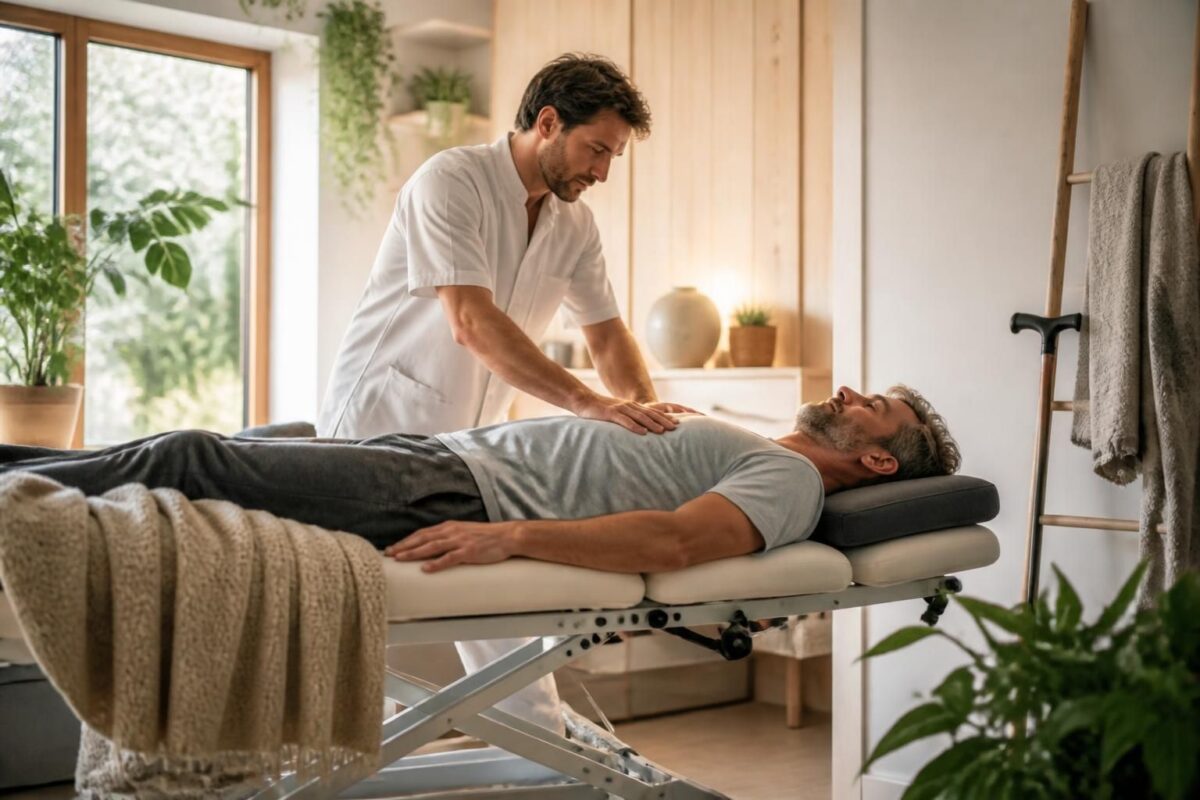
Why Osteopathy Is Essential For Recovery People
In short In short, Osteopathy in convalescence is an approach manual and holistic which helps to accelerate the recovery by restoring The balance, the mobility and a good circulation fabrics. it contributes to Reduce the pain, support the Back to…

Osteopathic manipulations to strengthen post-traumatic muscles
In short In short, Osteopathic manipulations for Strengthen post-traumatic muscles constitute a gentle manual approach aimed at restoring the mobility, reduce the pain and facilitate the Functional rehabilitation After a injury. What is Is it? A series of precise gestures…
Improved performance and progress
A Effective posture and smoother movements contribute directly to the improvement of performance. By optimizing the dynamics of the muscle chains and releasing joint restrictions, osteopathy helps to gain amplitude, better coordinate gestures and reduce pain that limit effort.
Beyond the physical, the approach can influence general well-being and concentration during training and competition, factors that support regular and lasting progression.

Osteopathy and prevention of work-related musculoskeletal disorders
In short theosteopathy is one Manual approach that restores body balance and prevents MSD related to work. Its advantages: reduction of tension, improvement of mobility and prevention of chronic pain. She is preventive and healing, suitable for office and trades…

The benefits of osteopathy to treat muscle imbalances
In short theosteopathy is a manual approach to restore themuscle harmony and postural considering the body as a whole. Its main benefits include the reduction of aches and tensions, the improvement of the mobility and from the posture, and prevention…
When to consult and what happens in session
You can consult for prevention or as soon as pain appears. The typical process begins with a targeted interview and examination of the movement, followed by gentle manipulations and functional adjustments adapted to the athlete. Each session is personalized and oriented towards concrete objectives such as improving mobility, reducing tension and coordinating gestures.
For lasting results, osteopathy is integrated into a training program and recovery routine. The practitioner can recommend exercises to be performed between sessions and coordinate with other professionals to ensure a consistent and effective approach.
| Aspect | Concise impact |
|---|---|
| Prevention of injuries | Reduces tension and reduces stress-related risks. |
| Recovery accelerated | Accelerates recovery and limits pain after exercise. |
| Mobility and Flexibility | Maintains amplitude and coordination during training. |
| Balance and stability | Improves neuromuscular control and joint stability. |
| Performance technical | Optimizes gestures and movement efficiency. |
| aches lumbar and sciatica | Reduces lower back and sciatic pain by a functional approach. |
| Return in training | Makes it easier to return to training smoothly. |
| Personalization of the program | Adapted to each athlete, program optimization. |
| Preparation to the competition | Supports warm-up and physical preparation. |
“As a middle distance runner, I felt every voltage In the lower back disturb my workouts. Osteopathy released my hips and hamstrings, and my stride became more regular, with a amplitude found and a recovery Improved. »
“For my football team, osteopathy is not a luxury but a need. It warn the injuries correcting imbalances and improving the mobility shoulders and hips. »
“In cycling, the recovery is as important as effort. Osteopathy helps to reduce post-activity pain and helps to start again on the next workout, with a performance increased. »
“In swimming, theamplitude Movements and back work gain through precise adjustments. My time has progressed and my mobility global has improved. »
“For strength sports, osteopathy improves thealignment body, reduces micro-traumas and optimizes the execution of technical gestures, which translates into better performance. »
“Osteopathy is essential because it treats the body as a whole and adapts to each training program, without medication or heavy intervention, favoring the prevention and the recovery. »
“Make an appointment and give the best of yourself on the pitch. The future of your performance depends on proactive preparation thanks to osteopathy. »
For athletes, theosteopathy is not a marginal option but a central component of physical preparation. By treating the body as an integrated system, the osteopath evaluates the mechanical, nervous and fascial dimensions that influence daily performance and competitions. Faced with specific loads of sport, repeated training and invisible microtraumas, this approach makes it possible to identify imbalances before they turn into injuries, thus ensuring a more lasting and safer practice. Whether you practice running, football, swimming or outdoor sports, osteopathy aims to unleash your potential by improving the mind-body synergy.
At the heart of the action, the objective is Improving mobility and flexibility, while optimizing the coordination of gestures. By working on muscle chains, fascias and joints, osteopathy reduces unnecessary tension and promotes the flexibility necessary for precise and effective gestures. This approach contributes to a Injury prevention and a reduction in energy losses during training, allowing the body to move with more ease and stability on all surfaces and in all conditions.
The diagnosis and treatment in the athlete is based on a personalized and precise approach. Evaluation includes motion observation, mobility tests and asymmetries analysis that can influence performance. The treatment can combine targeted manual techniques, work on the myofascial system and postural and respiratory advice adapted to each discipline. In some cases, additional tools may be considered, such as Motorized vertebral decompression, the laser and the shock waves, in order to promote tissue repair and optimize recovery.
Beyond direct care, osteopathy for athletes is part of a multidisciplinary approach that can include naturopathy, nutrition and sport-specific recovery protocols. The goal is to provide care evidence-based, personalized and measurable, in order to support the athletes in their progress and their sporting longevity. This collaboration aims to transform each session into a concrete step towards a Sustainable performance and a better recovery.
The benefits of osteopathy for athletes are reflected in a Increased mobility, a reduction of tensions and pain, Injury prevention related to overwork and acceleration of recovery after exercise. By integrating movement, breathing and stress management, osteopathy contributes to more constant endurance and a better quality of sporting life. Each program is adapted to sport, level and objectives, with measurable results in the field.
Whether you are an amateur athlete in order to optimize your training or professional sportsman aiming for competitive longevity, osteopathy offers a proactive and structured approach. The sessions adapt to your schedule and your constraints, while placing prevention at the forefront of your preparation. For athletes who really want to give the best on the pitch, osteopathy remains an essential piece of their overall training.
Ready to elevate your performance and well-being? Consider a sport-focused osteopathic assessment and learn how an evidence-based approach can transform your results and feelings of well-being on a daily basis.
This summary demonstrates why Osteopathy is one Essential approach for the sportsman, improving mobility, preventing injuries and optimizing recovery and the performance throughout the season.
In practice, theosteopathy offers personalized support that works on thealignment of the body, the relaxation of tension and the improvement of coordination between the muscular, nervous and circulatory systems, in order to support sports efforts and raise the level of training without compromising health.
it contributes to Improve mobility and to Prevent pain Related to practice through gentle techniques applied to stressed areas such as the back, hips and shoulders, reducing acute episodes and recovery delays.
In terms of circulation and from the recovery, osteopathy acts on the lymphatic circulation And the restoration of tensions, which accelerates tissue repair and allows you to return to training more quickly. To learn more, see This article on lymphatic circulation.
At the same time, care promotes better posture and one Body Alignment, reducing excessive loads and the risk of overwork. To see Optimal body alignment.
For teams and individual athletes, osteopathy can become a sustainable performance lever by integrating into a training program, coordinating the preparation and recovery phases and helping to manage the physical stress related to the competition. To understand the overall role, see Why osteopathy is an essential tool for athletes.
To go further, also explore: Why osteopathy is essential for a good quality of life, Osteopathy in sports practice, Optimal body alignment, How osteopathy helps prevent age-related pain, Osteopathy in athletes, Why osteopathy is essential for athletes, Osteopathy, an asset for athletes looking for performance.
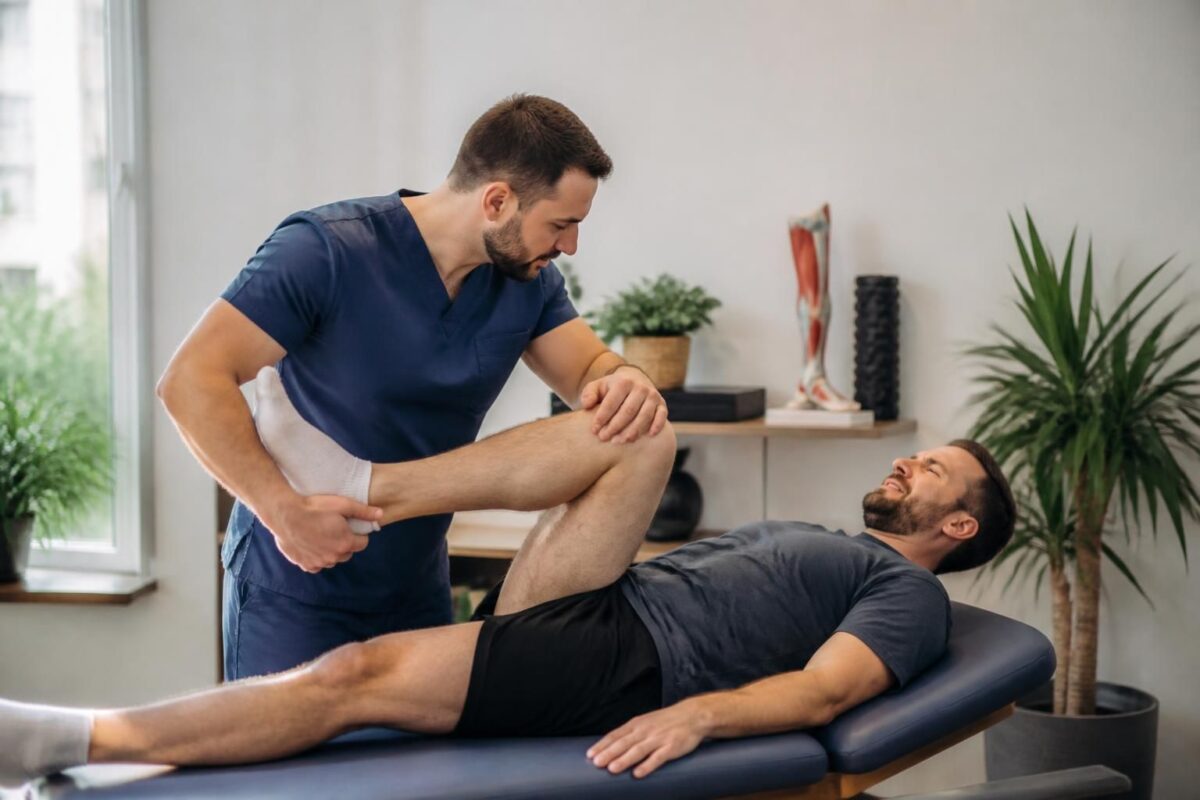
Osteopathy and chronic leg pain: regaining an optimal quality of life
In short In short, Osteopathy is one Global manual approach aimed at reducing Chronic leg pain and improve the quality of life. What is it? Non-drug therapy using the hands to identify restrictions and treat lesional chains. How does it…
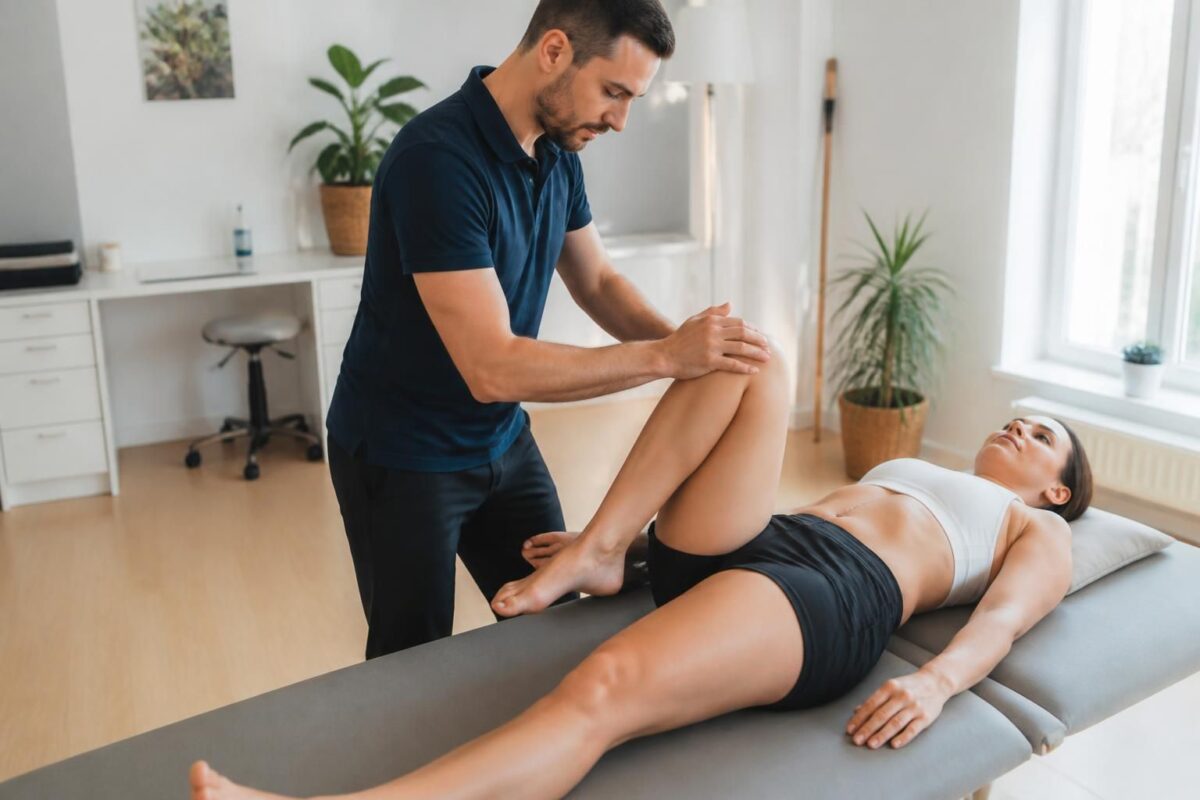
How osteopathy supports recovery after complex surgery
In short In short, Post-operative osteopathy is an approach fresh which supports the recovery After a Complex surgery. It helps to reduce the pain and the fatigue, improves the mobility and accelerates the healing thanks to a better vascularization and…

Dr Sylvain Desforges, B.Sc., D.O., N.D., osteopath, is the founding president of TAGMED and of the ACMA association. He dedicates his practice to chronic spinal pain, low back pain and symptoms compatible with sciatica, particularly when pain radiates toward the buttock, leg, calf, foot or toes.
Through SOS Sciatique, he publishes educational content on sciatica symptoms, possible causes such as disc herniation, disc narrowing, foraminal stenosis or irritation of a lumbar nerve root, as well as non-surgical approaches that may be considered according to the evaluation. At Clinique TAGMED, care may include, depending on the case, motorized neurovertebral decompression, specific osteopathic care or precision percussion.
For an evaluation related to sciatica treatment in Montreal / Mount Royal or sciatica treatment in Terrebonne, please consult the services available at Clinique TAGMED.
Medical disclaimer
The information published on SOS Sciatique is provided for educational purposes only and does not replace a consultation, diagnosis, opinion or treatment provided by a physician or another authorized healthcare professional. The author of this article is neither a medical doctor nor a specialist in a medical specialty recognized by the Collège des médecins du Québec. The osteopathic, manual medicine or functional support approaches described on this site do not constitute medical acts and are not intended to replace medical follow-up.
Consult a physician or emergency service in cases of loss of bladder or bowel control, anesthesia in the saddle area, significant or progressive weakness in the leg or foot, fever, recent trauma, severe pain or rapid worsening of symptoms. For more details, please read our Legal Notice.